


Co-Occuring Disorders and Why Integrated Care Helps
If you typed co-occuring into a search bar, you are not alone. This term is frequently misspelled online, and it almost always points to a bigger question: What does “co-occurring” mean in mental health and addiction treatment?
The standard spelling is co-occurring (with two r’s), and in behavioral health it usually refers to co-occurring disorders – when someone experiences a substance use disorder and a mental health condition at the same time. You may also hear this called dual diagnosis or comorbidity.
This topic matters because treating only one side of the picture can leave people stuck in a cycle: mental health symptoms fuel substance use, and substance use worsens mental health symptoms. Integrated care is designed to break that cycle.
Important note: If you or someone you love is in immediate danger, call 911. If there are thoughts of self-harm or suicide, call or text 988 for the Suicide and Crisis Lifeline in the US.
What co-occuring means in addiction and mental health
Co-occurring simply means happening at the same time. In the context of addiction treatment, it usually refers to the coexistence of:
- A mental health disorder (such as depression, anxiety, PTSD, bipolar disorder, schizophrenia, or ADHD)
- A substance use disorder (such as alcohol use disorder, opioid use disorder, stimulant use disorder, or cannabis use disorder)
According to SAMHSA, co-occurring disorders refer to the coexistence of both a mental health disorder and a substance use disorder, and approximately 21.2 million adults had a co-occurring mental illness and substance use disorder, based on SAMHSA’s 2024 NSDUH reporting. Source: SAMHSA – Co-Occurring Disorders.
That number is not just a statistic. It represents millions of people who may feel misunderstood, misdiagnosed, or blamed for symptoms that are actually interconnected and treatable.
Co-occurring disorders vs dual diagnosis vs comorbidity
These terms are closely related and often used interchangeably, but here is a helpful way to think about them:
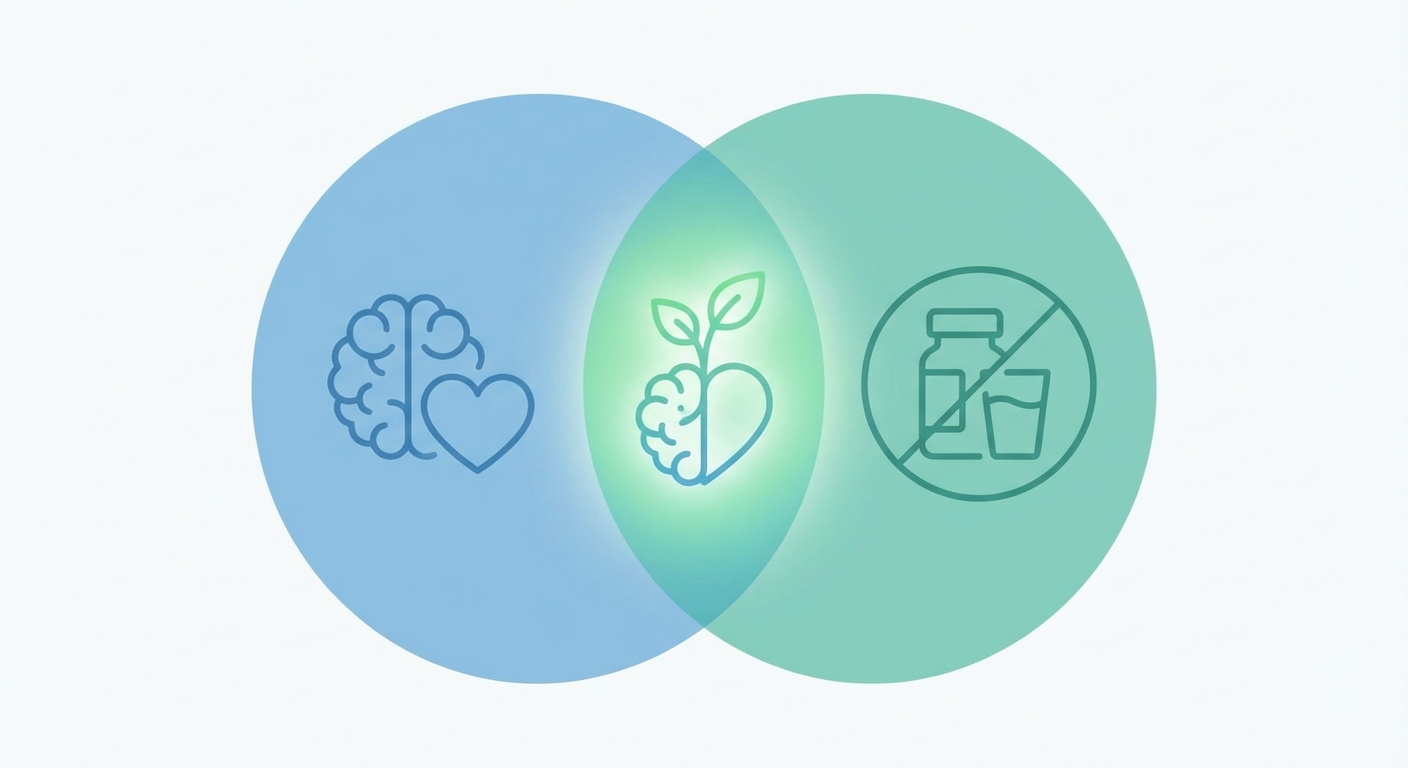
- Co-occurring disorders: A broad, commonly used term for mental health conditions and substance use disorders happening together.
- Dual diagnosis: Often used in treatment settings to emphasize that both a mental health diagnosis and a substance use diagnosis are present.
- Comorbidity: A medical term meaning two or more conditions occurring in one person. It can include mental health, substance use, and physical health conditions.
No matter which term you see, the key idea is the same: care works best when it addresses the full picture, not just one symptom or one diagnosis.
Why addiction and mental health so often overlap
People sometimes assume that mental health issues “cause” addiction or that addiction “causes” mental illness. In reality, it is usually more complicated. Co-occurring disorders can develop through overlapping risk factors and feedback loops.
Common reasons co-occurring disorders develop
- Self-medication: Alcohol or drugs may be used to numb panic, insomnia, trauma memories, shame, or emotional pain.
- Brain and body changes from substances: Ongoing substance use can worsen mood regulation, sleep, anxiety, and impulse control.
- Shared risk factors: Genetics, chronic stress, unstable housing, family history, violence, grief, and childhood trauma can raise risk for both mental illness and substance use disorders.
- Withdrawal and rebound symptoms: Withdrawal can look like severe anxiety or depression. That can push someone to use again just to feel “normal.”
- Social consequences: Substance use can lead to relationship conflict, job loss, or legal problems, which can intensify depression and anxiety.
If you are reading this while feeling overwhelmed, it may help to hear one simple truth: co-occurring disorders are not a moral failure. They are a health issue that deserves competent, compassionate treatment.
Common examples of co-occurring disorders
There is no single “typical” pairing, but some combinations show up frequently in clinical care:
- Alcohol use disorder + depression
- Alcohol use disorder + anxiety
- Opioid use disorder + PTSD
- Stimulant use disorder + anxiety, paranoia, or sleep disruption
- Cannabis use disorder + anxiety or mood symptoms
- Bipolar disorder + substance use disorder
- ADHD + substance misuse
Some people also live with additional health concerns such as chronic pain, hepatitis C, or HIV risk related to injection drug use. Integrated care often includes medical screening and coordinated healthcare support, not just counseling.
Signs you might be dealing with co-occuring disorders
Many people notice one set of symptoms first and miss the other. For example, a family might focus on drinking while overlooking panic attacks. Or a person might focus on depression while minimizing opioid use. A co-occurring pattern often has clues on both sides.
Possible substance use disorder signs
- Using more than intended, or being unable to cut down
- Cravings or preoccupation with using
- Withdrawal symptoms when not using (including sleep problems, anxiety, tremors, nausea)
- Continuing to use despite problems at work, school, or home
- Risky use (driving impaired, mixing substances, unsafe situations)
Possible mental health condition signs
- Persistent sadness, emptiness, hopelessness, or irritability
- Panic attacks, constant worry, or feeling on edge most days
- Trauma symptoms such as nightmares, flashbacks, avoidance, or hypervigilance
- Major mood swings, impulsivity, or periods of unusually high energy with little sleep
- Hearing or seeing things others do not, or intense paranoia
Overlap clues that often suggest dual diagnosis
- Using substances to cope with emotions, sleep, or intrusive memories
- Mental health symptoms worsen during heavy use or withdrawal
- Relapse happens after a stressful event or emotional trigger
- Stopping substances briefly does not fully resolve distress or instability
Even if you are not sure what you are seeing, you do not have to name it perfectly to get help. A good assessment can sort out what is going on.
How professionals assess and diagnose co-occurring disorders
Diagnosing co-occurring disorders takes care and time because substances can mimic mental health symptoms. For example, stimulant intoxication can look like anxiety or mania, and alcohol withdrawal can cause intense anxiety, agitation, or even hallucinations.

A thorough evaluation often includes:
- Clinical interview: mental health history, substance use history, trauma history, medical history
- Screening tools: questionnaires for depression, anxiety, PTSD, and substance use severity
- Medical review: medications, sleep, pain, thyroid issues, and other medical contributors
- Timeline review: when symptoms began relative to substance use patterns
- Safety assessment: overdose risk, self-harm risk, withdrawal risk
If you have ever felt dismissed as “just an addict” or “just anxious,” you deserve better. Quality dual diagnosis care should take your symptoms seriously and treat you as a whole person.
What integrated treatment is and why it matters
Integrated treatment means treating mental health and substance use conditions together, in a coordinated plan. This is widely considered best practice for co-occurring disorders because the conditions influence each other so strongly.
Integrated care may happen in different settings, such as outpatient therapy, intensive outpatient programs (IOP), residential treatment, or hospital-based programs, depending on severity and safety needs.
What integrated dual diagnosis care often includes
1) Evidence-based therapy
- Cognitive Behavioral Therapy (CBT): builds skills for cravings, avoidance, negative thinking, and relapse prevention
- Dialectical Behavior Therapy (DBT): supports emotion regulation, distress tolerance, and safer coping
- Motivational Interviewing (MI): helps people resolve ambivalence and build readiness for change
- Trauma-informed care: prioritizes safety and stabilization, avoids re-traumatization, and treats trauma appropriately
2) Medication when appropriate
Medication can be an important part of treatment for many people, but it needs careful coordination when substance use is involved. Depending on the diagnoses, treatment may include:
- Medications for depression or anxiety
- Mood stabilizers for bipolar disorder
- Medication-assisted treatment for opioid or alcohol use disorder
- Sleep support strategies that do not increase addiction risk
SAMHSA also cautions that combining certain medications can be dangerous, especially mixing medications for substance use disorder treatment with benzodiazepines in some situations. This is one reason integrated, coordinated prescribing matters.
3) Peer and recovery supports
- Group counseling that addresses both mental health and substance use
- Peer support and recovery coaching
- Family education and support services
- Relapse prevention planning and coping skill practice
4) Practical life stabilization
Symptoms often improve when life becomes safer and more stable. Integrated treatment may help with:
- Housing and case management support
- Employment or education support
- Coordinated medical care
- Legal advocacy or referrals when needed
Why treating only addiction or only mental health can backfire
Many people have tried to get help before and felt like it did not work. One common reason: the plan addressed only part of the problem.
- If addiction is treated but trauma, depression, or bipolar symptoms are ignored, those symptoms can drive relapse.
- If mental health is treated but substance use continues, therapy and medication may be less effective and crises may continue.
This is not about blame. It is about building a plan that matches reality. People heal faster and more sustainably when both conditions are treated together.
Content note: The video below discusses addiction and mental health challenges in a supportive, non-graphic way.
Which level of care is right for co-occurring disorders?
The “right” level depends on safety, severity, and support at home. A clinician can help determine the best fit, but here are general guidelines:
Outpatient therapy
Often appropriate when symptoms are mild to moderate, the person is medically stable, and there is a safe living environment.
Intensive outpatient program and partial hospitalization
Good for people who need structured treatment multiple days per week but can still live at home.
Residential treatment
May be appropriate when the home environment is unsafe, relapse risk is high, or symptoms are severe and require a higher level of structure and support.
Medical detox or inpatient care
Important when withdrawal may be dangerous (especially alcohol or benzodiazepines), or when there is high overdose risk, severe psychiatric symptoms, or suicidal thoughts.
If you’re comparing options, it can also help to understand what rehab facilities typically provide at different levels of care and what “treatment” includes beyond detox.
What to ask when looking for a dual diagnosis program
If you are calling programs or providers, it helps to ask direct questions so you can find a team equipped for co-occurring care:
- Do you treat co-occurring disorders or dual diagnosis?
- Is treatment integrated, meaning one coordinated plan for both mental health and substance use?
- How do you screen for depression, anxiety, PTSD, bipolar disorder, and psychosis?
- How do you handle medication management and continuity of care after discharge?
- Do you offer trauma-informed therapy? If so, what does that look like in early recovery?
- What does relapse prevention planning include?
If a program seems uncomfortable answering these questions or treats mental health as an afterthought, it may not be the best fit for true dual diagnosis needs.
When co-occuring symptoms are urgent
Seek emergency help right away if you notice:
- Signs of overdose (slow or stopped breathing, blue lips, cannot wake up)
- Severe withdrawal symptoms, especially from alcohol or benzodiazepines
- Psychosis (hallucinations, severe paranoia, extreme confusion)
- Suicidal thoughts, intent, or a plan
If you are not sure, it is still okay to reach out. It is better to get support early than to wait for things to escalate.
Related reading on Drug Addiction Now
- What rehab facilities do and how they help
- Alcohol effects on behavior and decision-making
- How long heroin can stay in your system
Frequently Asked Questions
What does co-occuring mean?
Co-occuring is a common misspelling of co-occurring. In addiction and mental health, co-occurring usually means a person has both a substance use disorder and a mental health condition at the same time.
Is co-occurring the same thing as dual diagnosis?
Often, yes. Dual diagnosis is a term used to describe co-occurring mental health and substance use disorders. Some providers use the terms interchangeably, but both point to the need to treat both conditions together.
What are common co-occurring disorders?
Common combinations include alcohol use disorder with depression or anxiety, opioid use disorder with PTSD, stimulant use disorder with anxiety or paranoia, and bipolar disorder with substance use disorder.
How do you treat co-occurring disorders?
Co-occurring disorders are typically treated with integrated treatment, which combines addiction treatment and mental health care in one coordinated plan. This may include therapy, medication management, peer support, and relapse prevention planning.
How do I know if I need dual diagnosis treatment?
You may benefit from dual diagnosis care if you use substances to cope with emotional pain, if mental health symptoms worsen during use or withdrawal, or if relapse keeps happening after trying to stop without addressing depression, anxiety, trauma, or mood instability.
Need Help Now?
If you or someone you love is struggling with addiction, help is available 24/7.
- SAMHSA National Helpline: 1-800-662-4357 (free, confidential, 24/7)
- Crisis Text Line: Text HOME to 741741
- National Suicide Prevention Lifeline: 988
Recovery is possible. Take the first step today.
Find Help Near You
Riverside North Support Information
1955 Chicago Ave, Riverside, CA 92507
Phone: (951) 462-2162