

Cocaine Addiction Symptoms and When to Get Help
Cocaine can feel like it gives energy, confidence, and focus, at least at first. But it can also change mood, sleep, judgment, and the body’s stress response in ways that become hard to control. If you are here because you are worried about your own cocaine use or you are trying to figure out what is happening with someone you love, you are not alone.
This guide explains cocaine addiction symptoms in a clear, practical way. You will learn how to recognize patterns, how to tell the difference between intoxication, addiction, and withdrawal, and what to do next, including when it is an emergency.
If you need help finding treatment today: SAMHSA’s National Helpline is free, confidential, and available 24/7/365 at 1-800-662-HELP (4357).
What counts as cocaine addiction
People use the word “addiction” in different ways. Clinically, providers often diagnose stimulant use disorder (cocaine is a stimulant). You do not have to use cocaine every day to have a serious problem. Many people get stuck in a cycle of binges, crashes, and cravings that gradually takes over more of their time, money, relationships, and mental health.
One simple way to think about it is this:
- Use can be occasional or experimental.
- Problematic use starts causing consequences (health, work, relationships) but the person may still believe they have control.
- Addiction is when the brain and behavior shift: cravings intensify, control drops, and the person keeps using despite clear harm.
Quick checklist of cocaine addiction symptoms
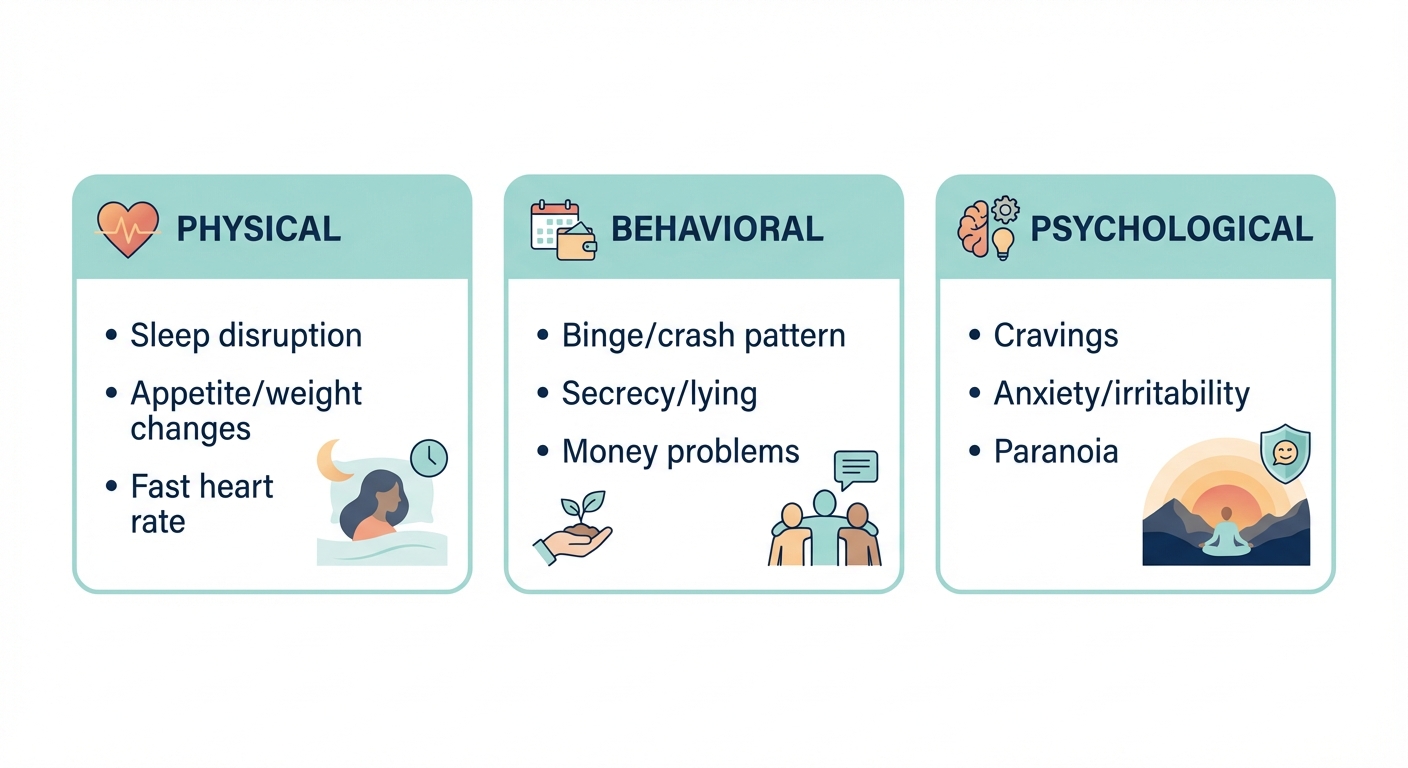
If you want a fast scan before reading the details, here are common cocaine addiction signs and symptoms. A single symptom does not prove addiction, but patterns matter.
Physical symptoms
- Dilated pupils, bloodshot eyes
- Nosebleeds, runny nose, frequent sniffing (snorting use)
- Burns on lips or fingers, chronic cough (smoking crack cocaine)
- High heart rate, high blood pressure
- Chest pain, shortness of breath
- Reduced appetite and weight loss
- Insomnia, then “crash” sleep
- Tremors, restlessness, jaw clenching (sometimes called “coke jaw”)
Behavioral symptoms
- Secretive behavior, disappearing, lying about whereabouts
- Rapid mood shifts, irritability, agitation
- Risk-taking, impulsive spending, borrowing money repeatedly
- Neglecting work, school, parenting, or basic responsibilities
- Using more often, using larger amounts, or using longer than planned
- Continuing to use despite relationship conflict or legal trouble
Psychological symptoms
- Strong cravings, obsession with the next use
- Anxiety, panic, feeling “wired” or on edge
- Paranoia or intense suspicion
- Depression during crashes, emotional numbness
- In severe cases: hallucinations or stimulant-induced psychosis
Signs of cocaine addiction by category
1) Physical cocaine addiction symptoms
Cocaine stresses the cardiovascular system and can affect the nose, lungs, and brain depending on how it is used. Physical signs often appear alongside behavioral changes.
Common physical signs include:
- Sleep disruption: staying up long hours, then sleeping for extended periods after stopping.
- Appetite changes: eating very little during use, then increased appetite during the crash.
- Visible restlessness: pacing, fidgeting, rapid speech.
- Nose and sinus problems: chronic congestion, nosebleeds, loss of smell, frequent “sniffing.”
- Heart-related symptoms: palpitations, chest tightness, shortness of breath, episodes that feel like panic but may be cardiac.
Important: Chest pain, weakness on one side, severe headache, confusion, or trouble speaking can be signs of a medical emergency (heart attack or stroke). Cocaine increases risk for both.
2) Behavioral cocaine addiction symptoms
Behavioral symptoms are often what families notice first. Cocaine can temporarily increase energy and confidence, but over time it commonly leads to impulsive decisions, conflict, and a narrowed focus on using and recovering from using.
Behavioral red flags that often point to addiction include:
- Loss of control: intending to use a little but ending up in a binge.
- Time distortion: hours or days disappear during runs, followed by a crash.
- Money problems: sudden shortages, selling belongings, unexplained withdrawals or missing funds.
- Relationship strain: increased arguments, broken trust, emotional distance.
- Work or school decline: missed shifts, lower performance, repeated “sick days.”
- Mixing substances: using alcohol, sedatives, or other drugs to come down or sleep.
3) Psychological and emotional symptoms
Cocaine strongly affects dopamine and other brain chemicals linked to motivation, reward, and stress. That is why cravings can feel overpowering, and why the “crash” can feel emotionally brutal. For a simple explainer on how brain chemicals relate to motivation and reward, see everything you need to know about serotonin and dopamine.
Common psychological symptoms include:
- Cravings: intrusive thoughts about cocaine, feeling unable to relax or enjoy anything without it.
- Anxiety and irritability: snapping at loved ones, feeling keyed up.
- Paranoia: believing others are watching, judging, or trying to harm them.
- Depression: especially after a binge ends, including hopelessness or suicidal thoughts.
If someone is experiencing paranoia, hallucinations, or is unsafe, treat it as urgent. Stimulant-induced psychosis can be dangerous, and people may act out of fear.
Use vs intoxication vs withdrawal vs addiction
Many people search for “symptoms” because they want to know what a symptom means. This table can help you connect what you are seeing with the most likely phase and the safest next step.
| What you see | What it may indicate | What to do |
|---|---|---|
| Very talkative, energized, confident; dilated pupils; not sleeping | Possible cocaine intoxication | Stay calm, reduce stimulation, do not escalate conflict. Watch for chest pain, confusion, or severe agitation. |
| Binge pattern followed by days of sleeping, depression, irritability | Crash after use, may overlap with withdrawal | Encourage hydration, food, rest, and support. Take suicidal talk seriously. |
| Strong cravings, using despite consequences, hiding use, money issues | Likely addiction pattern | Consider professional assessment. Explore treatment options and family support. |
| Chest pain, trouble breathing, seizures, confusion, weakness on one side, fainting | Medical emergency (possible overdose, heart attack, stroke) | Call 911 immediately. |
When cocaine symptoms are an emergency
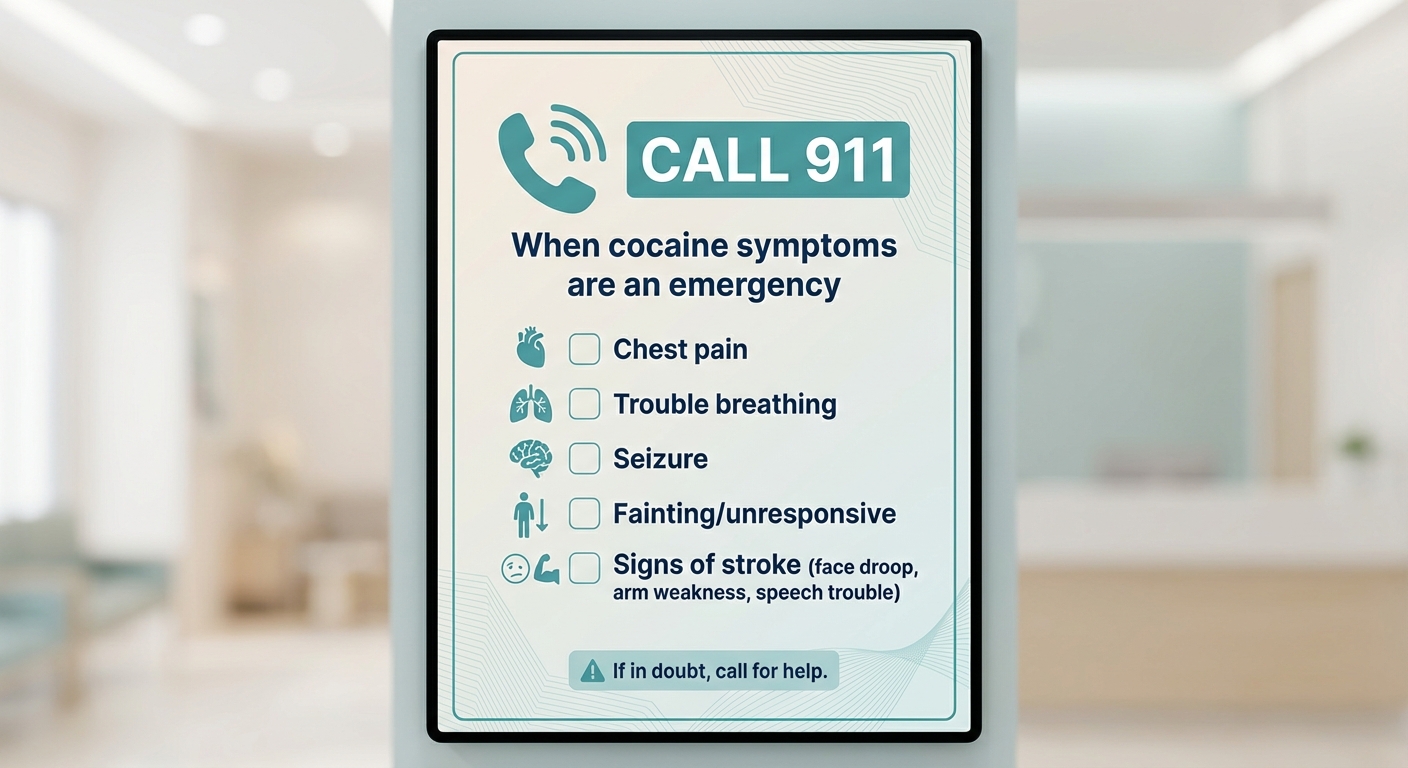
Do not wait it out if you see any of the following. Cocaine can cause life-threatening heart and brain complications, and risks can be higher because street drugs may be contaminated or mixed with other substances.
Call 911 if someone has:
- Chest pain, pressure, or tightness
- Shortness of breath or trouble breathing
- Seizure
- Fainting or unresponsiveness
- Severe agitation, confusion, or high fever
- Signs of stroke: face drooping, arm weakness, speech difficulty
- Suicidal behavior, threats, or inability to stay safe
If you suspect an opioid may be involved as well (for example, very slow breathing, bluish lips, cannot wake them), give naloxone if available and call 911. Even if cocaine is the main drug, contamination can happen. If you want to understand why this can happen, ADR has a helpful overview of the risks of speedballing (mixing opioids and stimulants).
Cocaine withdrawal symptoms
Cocaine withdrawal often looks different from alcohol or opioid withdrawal. It may not always include dramatic visible symptoms like vomiting or shaking, but it can be intensely uncomfortable and emotionally risky.
According to UF Health, when cocaine use stops or a binge ends, a crash can follow almost right away, with strong cravings and symptoms like fatigue, lack of pleasure, anxiety, irritability, sleepiness, and sometimes agitation or extreme suspicion or paranoia. UF Health also notes that craving and depression can last for months after stopping long-term heavy use and that withdrawal symptoms may be associated with suicidal thoughts in some people.
Common cocaine withdrawal symptoms include:
- Depressed mood
- Fatigue and low energy
- Increased appetite
- Sleep changes (sleeping a lot, insomnia, vivid unpleasant dreams)
- Restlessness or agitation
- Slowed thinking or movement
- Strong cravings
Why withdrawal matters: The emotional crash can be severe, especially if someone already lives with depression, trauma, bipolar disorder, or anxiety. This is a major reason professional support can be lifesaving even when physical withdrawal seems “mild.” Some people also experience longer-lasting symptoms after acute withdrawal; DAN explains this pattern in post-acute withdrawal syndrome (PAWS).
Long-term effects that can show up as symptoms
Some symptoms are not just “during use” or “during withdrawal.” Over time, cocaine can contribute to longer-lasting health and life impacts, including:
- Heart and circulation problems: ongoing blood pressure issues or cardiac strain.
- Mental health changes: anxiety, depression, panic, paranoia.
- Memory and attention issues: trouble focusing without cocaine, slower thinking.
- Relationship and legal consequences: trust erosion, unsafe driving, arrests.
Why cocaine addiction symptoms can be hard to spot
Many people hide cocaine use well, especially early on. Others appear “high functioning” until they suddenly are not. A few reasons symptoms can be confusing:
- Binge and crash cycles: Someone may look fine for days, then disappear for a night, then sleep for two days.
- Polysubstance use: Alcohol, benzodiazepines, sleep meds, cannabis, or opioids can mask or change cocaine symptoms.
- Co-occurring mental health conditions: Anxiety or bipolar symptoms can overlap with stimulant effects.
- Shame and secrecy: People often minimize use because they are scared of consequences.
What to do if you recognize the signs
If you are worried about your own cocaine use
- Write down the pattern, not just the intention: How often are you using? How much? Are you bingeing? What happens after?
- Notice loss of control: Using longer than planned, spending more than planned, or using to feel normal can be major markers.
- Do not detox alone if you feel unsafe: If you have severe depression, suicidal thoughts, paranoia, or medical symptoms, get professional help.
- Choose one next step today: Call a helpline, schedule an assessment, or tell one trustworthy person what is going on.
If you are worried about someone you love
You cannot force insight. But you can create safety, reduce enabling, and open a door to help.
- Pick your moment: Talk when they are sober and calm, not during intoxication or a crash.
- Lead with care and specifics: “I’m scared because I noticed you have not slept in two days and you missed work again.”
- Avoid arguing about whether it is “really addiction”: Focus on impacts and safety.
- Set boundaries you can keep: For example, not giving money, not covering for missed obligations.
- Get support for yourself: Family therapy, SMART Recovery Family and Friends, or other support groups can help you stay steady.
Treatment options for cocaine addiction
Recovery is possible, and treatment can work even if someone has relapsed before. The right plan depends on safety risks, mental health, and the intensity of use.
Assessment first
A quality assessment looks at:
- How often and how much cocaine is used
- Route of use (snorting, smoking crack, injecting)
- Overdose risk and medical history
- Depression, anxiety, trauma, ADHD, bipolar disorder
- Other substances used (especially alcohol, benzodiazepines, opioids)
- Home environment and supports
Detox and stabilization
There is no single “cocaine detox medication” that removes withdrawal instantly, but supportive care can be crucial. As UF Health notes, if symptoms are severe, a live-in treatment program may be recommended, and health and safety can be monitored during recovery. This can matter most when there is intense depression, suicidality, paranoia, or heavy polysubstance use.
Levels of care
- Inpatient or residential rehab: Best for high relapse risk, unstable living situations, co-occurring disorders, or safety concerns.
- Partial hospitalization program (PHP): Structured day treatment with more independence than residential.
- Intensive outpatient program (IOP): Several days per week, often good for people who can stay safe at home.
- Outpatient therapy: Ongoing counseling, relapse prevention, and mental health support.
Evidence-based therapies that help
For stimulant and cocaine addiction, behavioral treatments are a core part of care. Common evidence-based approaches include:
- Contingency management: A structured reward system that reinforces drug-free behaviors and treatment engagement.
- Cognitive behavioral therapy (CBT): Skills to manage cravings, challenge thinking traps, and change routines tied to use.
- Motivational interviewing (MI): Helps resolve ambivalence and build a personal reason to change.
- Community reinforcement and support: Rebuilding life structure, relationships, and healthy rewards.
If you are choosing a program, ask whether they offer contingency management or CBT specifically for stimulant use disorder, and whether they treat co-occurring mental health conditions, not just substance use. For a practical overview of treatment settings and how rehab works, see ADR’s guide to rehab and recovery resources.
Harm reduction while you plan treatment
The safest choice is not using at all, but harm reduction can lower risk while someone is still ambivalent or while you are arranging care.
- Do not use alone: Many deaths happen when no one can call for help.
- Avoid mixing substances: Combining cocaine with alcohol or sedatives can increase risk and cloud judgment.
- Take chest pain and severe anxiety seriously: Do not assume it is “just a panic attack.”
- Have a plan for a crash: Check in with someone, limit access to weapons, and reach out if depression spikes.
- Know emergency numbers: 911 for immediate danger. 988 for crisis support in the US.
FAQ about cocaine addiction symptoms
Can you be addicted to cocaine without using every day?
Yes. Addiction is not measured only by daily use. Many people develop a binge pattern with escalating consequences and loss of control.
How long do cocaine withdrawal symptoms last?
Withdrawal experiences vary. Many people feel an early “crash” soon after stopping. UF Health notes that cravings and depression can last for months after stopping long-term heavy use. If mood symptoms are severe or unsafe, professional care is recommended. For a more detailed “how long does it last” breakdown, see ALT: how long cocaine stays in your system (effects and withdrawal overview).
What is “cocaine syndrome” and is it the same as Cockayne syndrome?
They are not the same. Cockayne syndrome is a rare genetic disorder and has nothing to do with cocaine use. People sometimes type “cocaine syndrome” when they mean cocaine intoxication, cocaine withdrawal, or cocaine use disorder symptoms.
Is crack different from cocaine when it comes to symptoms?
Crack is a form of cocaine that is typically smoked. The effects can hit faster and wear off sooner, which may lead to more intense binge patterns. Many addiction symptoms overlap, but smoking can add respiratory signs (chronic cough, burns) and a faster cycle of cravings. For a deeper overview, read DAN’s explainer: what is crack (signs, dangers, side effects, and withdrawals).
A compassionate next step
If you recognized yourself or someone you love in these signs of cocaine addiction, you do not have to figure it out alone. A professional assessment can clarify what is happening and what level of care makes sense. Asking for help is not a moral failure. It is a health decision.
Need help right now? SAMHSA’s National Helpline is free, confidential, and available 24/7/365 at 1-800-662-HELP (4357).
Sources
- CDC, National Center for Health Statistics. Drug Overdose Deaths in the United States, 2003-2023 (Data Brief 522, published Dec 19, 2024). Includes note that from 2022 to 2023, rates increased for deaths involving cocaine by 4.9% (from 8.2 to 8.6 per 100,000).
- UF Health. Cocaine Withdrawal. Last reviewed Jan 8, 2025. Describes withdrawal symptoms and notes cravings and depression can last months and may involve suicidal thoughts.
- SAMHSA. SAMHSA’s National Helpline. Free, confidential, 24/7/365 treatment referral and information service.