

Detox Centers That Take IEHP and What to Ask First
Searching for detox centers that take IEHP usually means you are trying to solve two urgent problems at once: getting someone medically safe through withdrawal, and doing it in a way that does not trigger unexpected bills or delays.
If you are feeling overwhelmed, you are not alone. The system can be confusing, especially when people are sick, scared, or running out of time. This guide is designed to be practical and neutral. It explains what “taking IEHP” really means, how to verify in-network detox, what prior authorization can involve, and what to do if you cannot find an immediate bed. For a broader overview of IEHP support, see our IEHP guide for addiction and mental health care.
Important: If someone has severe symptoms (confusion, hallucinations, seizures, chest pain, trouble breathing, fainting), call 911 or go to the emergency room. Alcohol and benzodiazepine withdrawal can be life-threatening.
Why “We Take IEHP” can still cause delays
Facilities sometimes say they “accept IEHP” when what they mean is one of these:
- In-network: The detox program has a contract with IEHP for the specific level of care you need. This is usually the smoothest path for coverage.
- Out-of-network: They might still offer services, but coverage can be limited or denied, and you could be billed.
- They take Medi-Cal, but not IEHP for detox: Some programs accept Medi-Cal generally but are not contracted with your managed care network for withdrawal management.
- They accept IEHP for some services, not detox: For example, outpatient counseling might be in-network, but a specific detox unit or level of care is not.
Even when a program is legitimate and caring, insurance rules and capacity issues can slow admission. The goal is to reduce those barriers with a short verification process. If you’re trying to avoid scheduling delays, you can also compare this related guide: detox centers that take IEHP without delays.
First, know which detox level you are looking for
Detox is a set of medical and clinical interventions to manage acute intoxication and withdrawal. SAMHSA describes detoxification as “a set of interventions aimed at managing acute intoxication and withdrawal,” and emphasizes that detox alone is not sufficient treatment for substance use disorders. Detox is usually the first step into a fuller plan of care. (SAMHSA TIP 45)
The detox “level” matters because it affects:
- What is medically appropriate and safe
- What is available quickly
- What IEHP may cover based on medical necessity
- Whether prior authorization is required
Common detox settings you may hear about
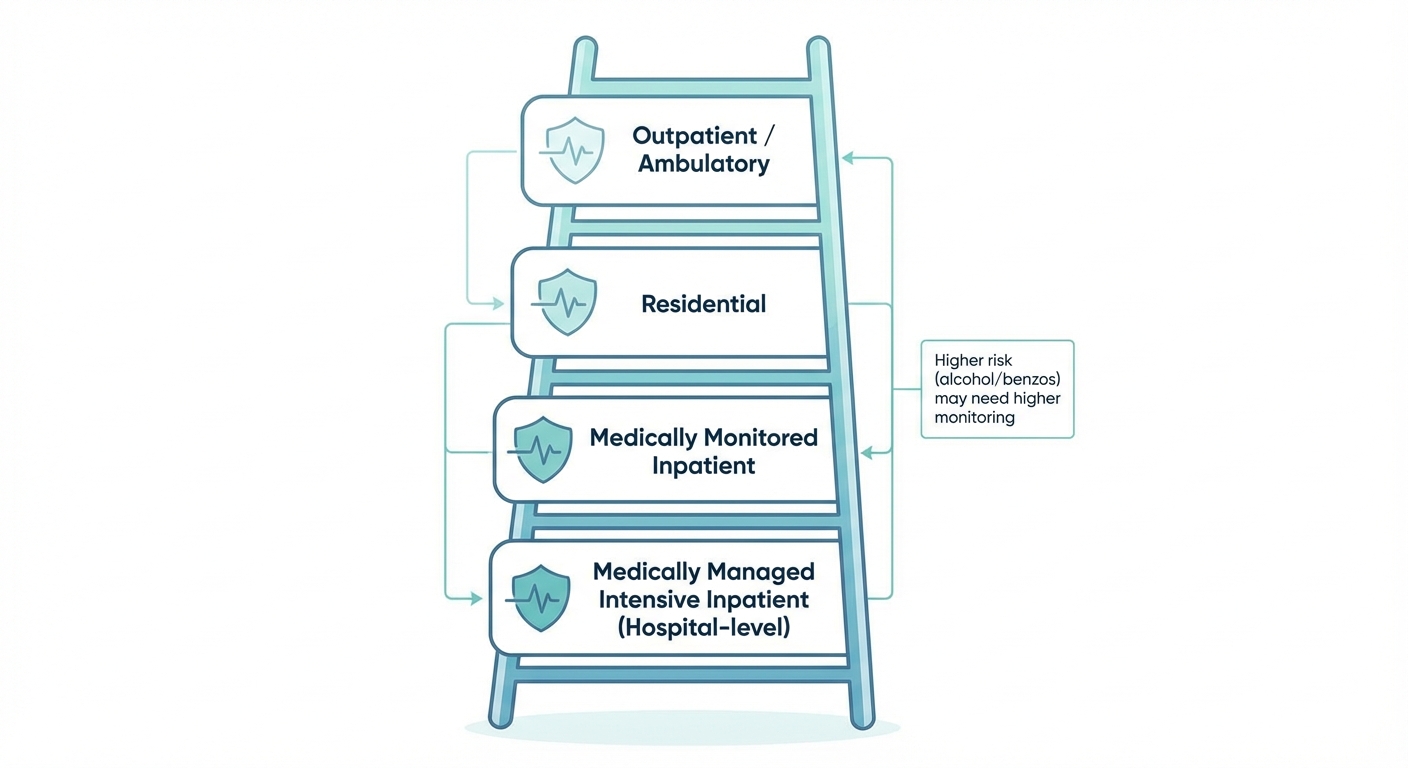
- Ambulatory or outpatient withdrawal management: Clinic-based support with scheduled check-ins. Not appropriate for everyone.
- Residential withdrawal management: 24-hour structure and monitoring, sometimes with limited medical staffing depending on the program.
- Medically monitored inpatient detox: 24/7 medical monitoring, often needed for higher-risk withdrawal.
- Medically managed intensive inpatient detox: Hospital-level detox for complex or severe cases.
High-risk withdrawal is more common with alcohol and benzodiazepines, especially if there is a history of seizures, delirium tremens, or significant medical conditions.
Step-by-step: How to find detox centers that take IEHP
Step 1: Gather the details that intake and IEHP will ask for
Having this information ready can speed up placement and authorization:
- IEHP member ID and date of birth
- Current medications and allergies
- Substances used (what, how much, how often)
- Time of last use
- History of withdrawal complications (seizures, hallucinations, delirium tremens)
- Medical and mental health history, including suicidality
- Pregnancy status if applicable
- Any recent ER visits or hospitalizations
Step 2: Call the detox program and ask these questions exactly
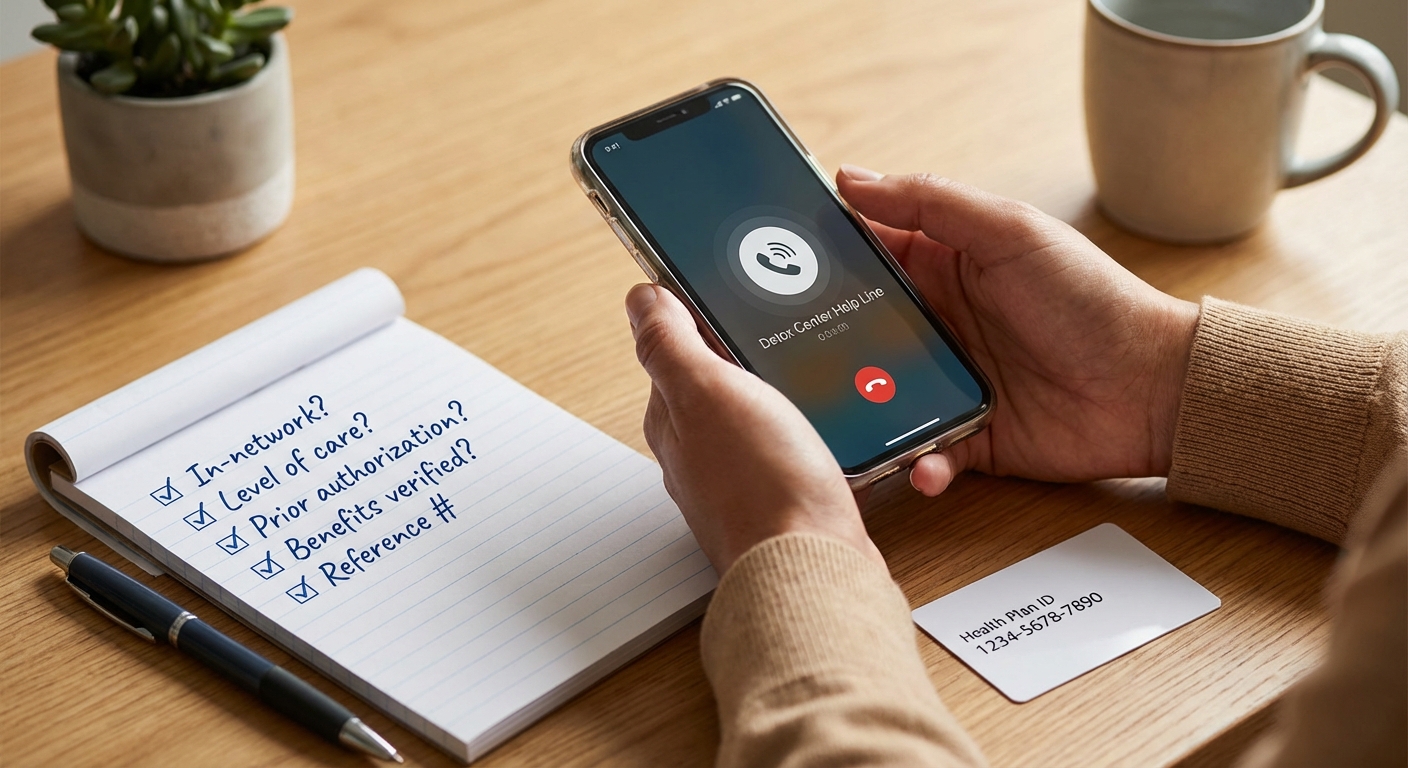
When you call, be direct and specific. You are trying to confirm both network status and admission requirements.
- Are you in-network with IEHP for detox or withdrawal management?
- Which IEHP plan types do you take? (Networks can vary.)
- Which level of care is this admission billed as? (Outpatient, residential, inpatient.)
- Do you require prior authorization before admission?
- Can you verify my benefits and eligibility today?
- What costs could I be responsible for? Ask about copays, deductibles, and any fees that are not covered.
- What do you need from me to start the process? (Clinical assessment, referral, records.)
Tip: Ask them to spell the legal name of the facility as it appears in insurance contracts. Network verification is often tied to the exact entity name and location.
Step 3: Call IEHP to confirm it is truly in-network
This is the most reliable step. Ask IEHP to confirm:
- The provider/facility is in-network for the specific detox level
- Your benefits for IEHP behavioral health and substance use disorder treatment
- Whether a referral is needed (sometimes from a PCP)
- Whether prior authorization is required
- Any limits or documentation requirements tied to medical necessity
Write down the date and time of the call, the representative’s name, and any reference number.
If you want an additional “call script” and quick verification flow, see: how to get in-network for IEHP detox.
How prior authorization works for detox
Prior authorization is a review process to confirm the level of care is medically necessary and meets plan rules. It can feel frustrating, but it is also common, especially for inpatient or residential services.
What helps approvals move faster
- A documented withdrawal risk assessment
- Clear details on substances used and last use
- Prior withdrawal complications or failed outpatient attempts
- Co-occurring mental health needs (depression, anxiety, psychosis)
- Medical conditions that raise risk (heart disease, pregnancy, seizure history)
- A plan for what happens after detox (next level of treatment)
SAMHSA notes detox should include evaluation, stabilization, and fostering entry into ongoing treatment, because detox alone is incomplete without a next-step plan. (SAMHSA TIP 45)
Medi-Cal detox coverage and IEHP basics
IEHP is a managed care plan for many Medi-Cal members. Medi-Cal detox coverage is typically tied to:
- Eligibility at the time of service
- In-network status of the facility and clinicians
- Medical necessity for the level of withdrawal management
- Authorization and documentation requirements
If a facility pressures you to commit immediately without confirming whether they are in-network for detox, slow down and verify. Ten extra minutes on the phone can prevent days of delays later. For benefits basics and next steps after stabilization, see IEHP covered rehab: how to use your benefits.
What to do if you cannot find an immediate in-network detox bed
Bed availability changes daily, and you might hear “no openings” even from in-network providers. If that happens:
1) Ask IEHP for urgent placement help
Request additional in-network options and ask if there is a process for urgent placement or care coordination.
2) Expand the distance you are willing to travel
It is common for the closest facilities to be full. Expanding your radius can quickly increase options.
3) Ask about safe alternatives for the short term
If inpatient detox is not immediately available, IEHP or an intake clinician may recommend a different level of care temporarily, such as extended outpatient monitoring. This is only appropriate if the person is medically stable and has safe housing and support.
4) Use the emergency department if withdrawal risk is severe
Some withdrawal syndromes are dangerous without medical care. SAMHSA lists symptoms that can require immediate medical attention such as changes in mental status, hallucinations, significant blood pressure and heart rate changes, and signs of profound nervous system irritability that can indicate seizure risk. (SAMHSA TIP 45)
Also, if the person may be at risk of overdose, call 911. While the U.S. has seen improvement recently, overdose deaths remain high. CDC provisional data estimated 80,391 drug overdose deaths in 2024, down 26.9% from an estimated 110,037 in 2023. (CDC NCHS press release, May 2025)
If you are in the Inland Empire and need local starting points, DAN also has location-based guidance such as what detox programs in San Bernardino accept IEHP.
Questions to ask a detox center before you choose
Once you have a short list of detox centers that take IEHP, these questions can help you choose a safer, more effective option:
- Do you have 24/7 medical coverage? If not, who is onsite overnight?
- What substances do you most commonly detox? Alcohol and benzodiazepines often require specialized monitoring.
- How do you treat opioid withdrawal? Ask about comfort medications and whether they can initiate medication for opioid use disorder when appropriate.
- How do you screen for mental health crises? Ask how they handle suicidality and severe anxiety.
- What happens after detox? Do they help schedule outpatient care, residential treatment, or follow-up appointments?
- Do you offer family involvement in discharge planning? With patient consent, family education can reduce relapse risk.
Do not stop at detox: plan your next step
Detox is often the first door into recovery, not the finish line. People do best when detox is immediately followed by treatment that fits their needs, such as residential care, partial hospitalization, intensive outpatient programs, therapy, and peer support.
If you want more background on how treatment programs work, see our overview: Rehab facilities and their role in recovery.
If alcohol is involved and you are trying to understand the broader impact of drinking, you may also find this helpful: Do drunk people tell the truth?
For readers who want a more “checklist-style” approach to coordinating care across detox and rehab, ADR has a useful companion guide: IEHP covered rehab checklist for fast admission. If you’re also interested in wellness-based supports after stabilization, ALT covers integrative options here: detox centers that accept IEHP coverage checklist.
Quick checklist for IEHP in-network detox
- Confirm the recommended detox level (outpatient vs residential vs inpatient)
- Ask the facility: “Are you in-network with IEHP for detox?”
- Ask IEHP to confirm: in-network status, benefits, referrals, and prior authorization
- Get a benefits verification from the facility in writing if possible
- Know what to do if symptoms worsen (ER or 911)
- Schedule the next level of care before discharge
Frequently Asked Questions
How can I confirm a detox center really takes IEHP?
Confirm it twice: ask the facility if they are in-network with IEHP for detox/withdrawal management, then call IEHP to verify the facility and level of care are in-network for your plan. Ask if prior authorization or a referral is required.
Does IEHP cover medically supervised detox?
IEHP coverage depends on your specific benefits, the facility being in-network, and medical necessity for the level of care. In general, medically supervised detox can be covered when it is clinically necessary, but inpatient or residential care may require prior authorization.
What is prior authorization for detox and how long does it take?
Prior authorization is an insurer review to confirm medical necessity and plan requirements. Timelines vary, but it often moves faster when the facility submits a complete clinical assessment with withdrawal risk, medical history, and a plan for ongoing treatment after detox.
What if there are no in-network detox beds available?
Ask IEHP for additional in-network options and urgent placement help, expand your travel radius, and ask whether a lower level of withdrawal management is safe temporarily. If symptoms are severe or worsening, go to the emergency department or call 911.
Is it safe to detox at home?
It depends on the substance and your medical history. Alcohol and benzodiazepine withdrawal can be dangerous and require medical monitoring for many people. Seek urgent care if there is confusion, hallucinations, seizures, severe vomiting or dehydration, chest pain, or suicidal thoughts.
Need Help Now?
If you or someone you love is struggling with addiction, help is available 24/7.
- SAMHSA National Helpline: 1-800-662-4357 (free, confidential, 24/7)
- Crisis Text Line: Text HOME to 741741
- National Suicide Prevention Lifeline: 988
Recovery is possible. Take the first step today.
Sources
- SAMHSA. TIP 45: Detoxification and Substance Abuse Treatment (Quick Guide for Clinicians). https://nida.nih.gov/sites/default/files/samhsa_detoxification_and_substance_abuse_treatment.pdf
- CDC National Center for Health Statistics. U.S. Overdose Deaths Decrease Almost 27% in 2024 (Press release, May 14, 2025). https://www.cdc.gov/nchs/pressroom/releases/20250514.html
Find Help Near You
Slover Industrial Wellness & Logistics
16726 Slover Ave, Fontana, CA 92337
Phone: (840) 251-0683