



Co-Occuring Disorders: Signs and Dual Diagnosis Care
If you searched for co-occuring, you are not alone. It is a common misspelling of co-occurring, a term used in addiction and mental health care when a substance use disorder and a mental health condition happen at the same time.
When these issues overlap, it can feel confusing and exhausting. Many people blame themselves or think they should be able to fix it with willpower. In reality, co-occurring disorders are treatable, and recovery often becomes more realistic when both conditions are addressed together in a coordinated plan.
This guide breaks down what “co-occuring” usually means, how to recognize patterns that suggest dual diagnosis, and what effective integrated treatment can look like. If you’re also comparing treatment settings, see how rehab facilities support addiction recovery and what programs often include.
What does co-occuring mean in addiction treatment?
In behavioral health, “co-occuring” almost always refers to co-occurring disorders, which the Substance Abuse and Mental Health Services Administration (SAMHSA) defines as the coexistence of a mental health disorder and a substance use disorder. Co-occurring disorders can involve “any combination of two or more SUDs and mental disorders” identified in the DSM-5-TR. Source: SAMHSA.
You might also hear:
- Dual diagnosis – often used interchangeably with co-occurring disorders
- Comorbidity – the clinical term meaning two conditions occurring together
- Mental health and substance use disorder – a plain-language description of the same situation
Examples of co-occurring disorders
- Alcohol use disorder + major depression
- Opioid use disorder + PTSD
- Methamphetamine use disorder + anxiety or panic disorder
- Cannabis use disorder + bipolar disorder
- Misuse of benzodiazepines + insomnia + severe anxiety
Sometimes the mental health symptoms existed first. Sometimes substance use came first and triggered or worsened symptoms. Often, people are not sure which started it. That is common, and it is exactly why an integrated assessment matters.
How common are co-occurring disorders?
Co-occurring disorders are more common than most people realize. SAMHSA reports that, based on the 2024 National Survey on Drug Use and Health, approximately 21.2 million adults had a co-occurring mental illness and substance use disorder. Source: SAMHSA co-occurring disorders page.
If you are reading this and thinking, “This sounds like me” or “This sounds like my partner or my adult child,” it does not mean you have failed. It often means the problem has been under-treated or treated in pieces.
Why addiction and mental health often overlap
There is not one single cause of co-occuring disorders. More often, several forces interact over time. Here are some of the most common patterns clinicians see.
1) Self-medication
Many people use substances to try to manage mental health symptoms. It can start innocently and become a trap:
- Drinking to “take the edge off” anxiety
- Using opioids to emotionally numb grief or trauma
- Using stimulants to push through depression, fatigue, or ADHD symptoms
- Using cannabis to sleep, then needing more to get the same effect
Self-medication may bring short-term relief, but it often worsens symptoms long term by disrupting sleep, increasing anxiety sensitivity, and creating withdrawal cycles.
2) Substances can trigger or worsen mental health symptoms
Alcohol and many drugs can intensify or even mimic mental health disorders. For example, alcohol can lower inhibition and intensify conflict—some people wonder if it “reveals the truth,” but the reality is more complicated. Related: Do drunk people tell the truth?
- Stimulants can increase panic, agitation, paranoia, and insomnia.
- Heavy alcohol use can worsen depression and rebound anxiety.
- Withdrawal from many substances can create anxiety, irritability, and mood swings that feel “mental” but are partly biological.
3) Shared risk factors
Some factors increase the likelihood of both mental illness and substance use disorder:
- Childhood trauma or ongoing violence
- Chronic stress and untreated grief
- Family history and genetics
- Unstable housing, isolation, or unemployment
- Chronic pain and health conditions
When these are present, a “just stop using” approach is rarely enough.
Signs of co-occuring disorders
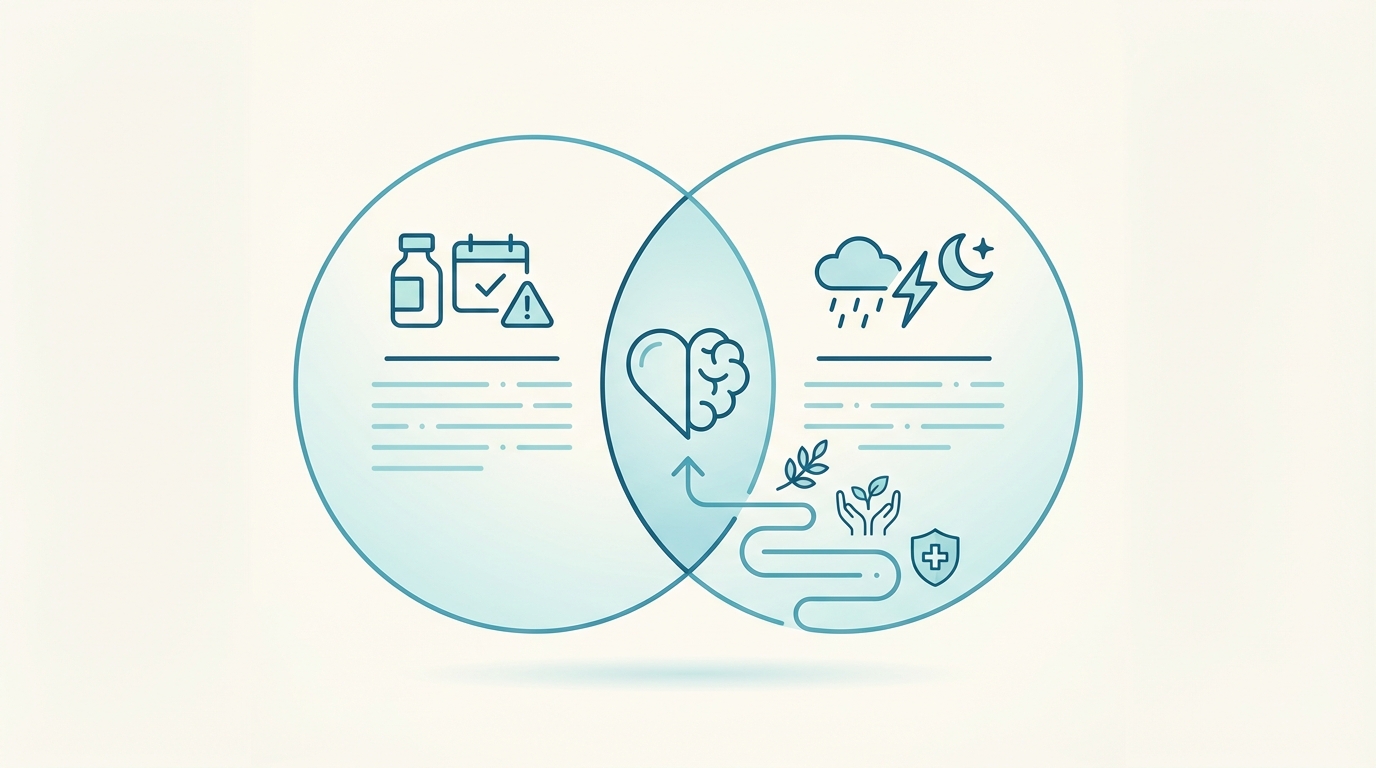
Co-occurring disorders do not always look dramatic from the outside. Some people keep jobs and relationships for a long time while quietly struggling. Others hit a crisis quickly.
Substance use signs that may point to a deeper problem
- Using more than intended, or being unable to cut down
- Cravings or compulsive use even with consequences
- Withdrawal symptoms when you try to stop
- Using in risky situations (driving, mixing substances, unsafe environments)
- Neglecting work, school, parenting, health, or relationships
Mental health signs that commonly co-occur with addiction
SAMHSA lists common mental disorders that may be involved, including anxiety and mood disorders, schizophrenia, bipolar disorder, major depressive disorder, PTSD, and ADHD. Source: SAMHSA.
Symptoms may include:
- Persistent sadness, numbness, hopelessness, or loss of interest
- Constant worry, panic attacks, or feeling on edge
- Sleep disruption that does not improve even when you “try harder”
- Flashbacks, nightmares, or hypervigilance (common with PTSD)
- Extreme mood swings, impulsivity, or periods of very little sleep (possible bipolar spectrum)
- Paranoia, hallucinations, or disorganized thinking (urgent to evaluate)
Red-flag patterns that suggest dual diagnosis
- You use substances to manage emotions, not just socially.
- Your symptoms spike during withdrawal or after binge use.
- You have tried therapy or medication, but substance use keeps derailing progress.
- You relapse most often when anxiety, depression, trauma reminders, or loneliness increase.
- You cannot tell what is causing what anymore, and you feel stuck.
If you or someone you love is having thoughts of self-harm or suicide, or feels unsafe, call 988 in the U.S. for immediate support, or call emergency services.
Why treating only one condition often fails
Co-occuring disorders are not “two separate problems.” They usually interact.
- If someone gets addiction treatment but their depression or PTSD is untreated, cravings and relapse risk can rise when symptoms return.
- If someone gets mental health treatment but continues heavy substance use, medications and therapy can be less effective, and symptoms are harder to interpret accurately.
This is why many evidence-based programs focus on integrated treatment, meaning care for mental health and substance use disorder is planned together, ideally by a coordinated team.
What integrated treatment for co-occurring disorders looks like

Integrated treatment is not one single therapy. It is a care model. The best plan depends on the substances involved, mental health severity, safety risks, and the person’s life situation. Most effective care includes several pieces:
1) A careful assessment, not a rushed label
A quality dual diagnosis assessment typically covers:
- Substance use history (what, how much, how often, last use)
- Withdrawal risk (especially alcohol, benzodiazepines)
- Mental health symptoms across time (including before substance use)
- Trauma history (at the person’s pace, with consent)
- Medical history, medications, sleep, and pain
- Safety screening (suicidal thoughts, self-harm, violence risk)
It is common for clinicians to reassess after detox or early stabilization because intoxication and withdrawal can mimic depression, anxiety, and even psychosis.
2) Detox when needed, with medical support
Not everyone needs detox, but some withdrawals can be medically dangerous, especially alcohol and benzodiazepines. Medically monitored detox can:
- reduce risk of seizures or other complications
- stabilize sleep and appetite
- make mental health symptoms easier to evaluate clearly
Safety note: SAMHSA warns that combining medications used for treating substance use disorders with anxiety medications such as benzodiazepines can have serious adverse effects. If you are taking benzodiazepines (Xanax, Valium, Klonopin, and others), do not stop suddenly without medical guidance. Source: SAMHSA.
3) Therapy that targets both mental health and addiction
Evidence-based approaches often include:
- Cognitive Behavioral Therapy (CBT) – helps identify thoughts and behaviors that drive use and mental health spirals
- Dialectical Behavior Therapy (DBT) – supports emotion regulation, distress tolerance, and crisis skills (often helpful for self-harm urges and intense emotions)
- Motivational Interviewing (MI) – strengthens readiness and reduces shame-based resistance
- Trauma-informed care – recognizes how trauma affects the nervous system and avoids re-traumatization
- Contingency management – uses structured rewards to support recovery behaviors (strong evidence base, especially for stimulant use disorders)
4) Medication management when appropriate
Medication can support recovery, stabilize mood, and reduce relapse risk. Depending on the diagnosis, a treatment team may consider:
- medications for depression, anxiety, PTSD, or sleep
- mood stabilizers for bipolar disorder
- medications for opioid use disorder such as buprenorphine or methadone
- medications for alcohol use disorder such as naltrexone or acamprosate
Medication decisions should consider overdose risk, interactions, and whether substance use could interfere with safe use. If a provider dismisses your substance use history when prescribing, it is okay to ask more questions or seek a second opinion.
5) A relapse prevention plan that accounts for mental health triggers
Relapse prevention for co-occuring disorders is not just “avoid people, places, and things.” It also includes:
- identifying emotional triggers (shame, panic, grief, anger, loneliness)
- sleep and routine stabilization
- craving management strategies
- ongoing therapy and medication follow-ups
- peer support (12-step, SMART Recovery, or other mutual-help groups)
- family support or couples counseling when appropriate
For some people, a step-down approach works best: residential or partial hospitalization to stabilize, then an intensive outpatient program (IOP), then standard outpatient care. If relationships are a major relapse trigger (or a major source of support), rehab for couples can be an option some programs offer.
Inpatient vs outpatient dual diagnosis care
Choosing a level of care can be hard, especially when you are overwhelmed. The goal is to choose the least restrictive setting that is still safe and effective.
Inpatient or residential may be a better fit if
- there is heavy daily use or high withdrawal risk
- there are severe symptoms such as mania, psychosis, or suicidal thoughts
- the home environment is unsafe, unstable, or full of triggers
- there have been multiple relapses despite outpatient care
Outpatient or IOP may be a better fit if
- symptoms are moderate and relatively stable
- you have a safe living environment and reliable transportation
- you can attend therapy frequently and keep medication appointments
- you have a crisis plan and supportive people you can call
If you are unsure, a professional assessment can help match you to the right level of care. If you’re comparing programs and logistics, American Drug Rehabs also breaks down practical options like halfway houses and transitional living for people stepping down from higher levels of care.
How to talk to a provider about co-occuring issues
You do not need to show up with a perfect diagnosis. What helps most is being honest about patterns.
Consider sharing:
- what you use, how often, and what happens when you stop
- what symptoms you are trying to manage (sleep, panic, numbness, focus, trauma memories)
- any past diagnoses or medications, including what helped and what did not
- your biggest relapse triggers
- any safety concerns, including thoughts of self-harm
A simple way to start the conversation:
“I think my mental health and substance use are connected, and I want a plan that treats both.”
What family members can do right now
If you are supporting someone you love, co-occuring disorders can be especially painful because the person may seem “like two different people” depending on symptoms and substance use. A few practical steps can help:
- Focus on safety first. If there is overdose risk, consider having naloxone available and learn how to use it.
- Use specific observations, not labels. “I notice you drink more when you are not sleeping” can land better than “You are an addict.”
- Encourage an integrated evaluation. A dual diagnosis assessment can reduce trial-and-error care.
- Get support for yourself. Al-Anon, Nar-Anon, or therapy can reduce burnout and help you set boundaries without abandoning the person.
If your loved one is also dealing with depression (or you suspect it), this guide on depression, functioning, and disability accommodations can help you understand practical supports that may reduce crisis pressure while treatment starts.
Frequently Asked Questions
Is co-occuring the same as co-occurring?
Yes. Co-occuring is a common misspelling. In addiction and mental health care, the correct term is co-occurring disorders, meaning a mental health disorder and a substance use disorder happening at the same time.
What is the difference between co-occurring disorders and dual diagnosis?
They are often used interchangeably. Some clinicians use dual diagnosis to mean one mental health disorder plus one substance use disorder, while co-occurring can include multiple mental health or substance use conditions at once.
Can co-occurring disorders be treated successfully?
Yes. Many people improve with integrated treatment that addresses mental health and substance use together, plus ongoing support such as therapy, medication management when appropriate, and relapse prevention planning.
Do I need detox before dual diagnosis treatment?
Not always. Detox is most important when there is medical withdrawal risk (especially alcohol or benzodiazepines) or when stabilization is needed so clinicians can evaluate symptoms more clearly. A professional assessment can help determine the safest next step.
What are common signs that addiction is tied to mental health?
Common signs include using substances to manage anxiety, depression, trauma memories, or sleep; symptoms that spike during withdrawal or after binges; and repeated relapses linked to stress, panic, loneliness, or mood swings.
Need Help Now?
If you or someone you love is struggling with addiction, help is available 24/7.
- SAMHSA National Helpline: 1-800-662-4357 (free, confidential, 24/7)
- Crisis Text Line: Text HOME to 741741
- National Suicide Prevention Lifeline: 988
Recovery is possible. Take the first step today.
Find Help Near You
Olive Wood Behavioral Support & Wellness
23328 Olive Wood Plaza Dr, Moreno Valley, CA 92553
Phone: (951) 521-2880