


Detox Centers That Take IEHP Without Delays
If you are searching for detox centers that take IEHP, there is a good chance you are trying to make a decision under pressure. Withdrawal symptoms can escalate quickly, and insurance questions can slow everything down when you are already exhausted.
This guide is designed to help you move faster while staying safe. You will learn how IEHP detox coverage typically works, what programs mean by “withdrawal management,” how to verify whether a facility is actually in-network, and what to do if you cannot find a bed today.
Important: This article is general education, not medical or legal advice. If symptoms feel dangerous or unpredictable, go to the emergency room or call 911.
What counts as “detox” for IEHP coverage?
People often use the word “detox” to mean any place that helps them stop using. In healthcare and insurance, detox is usually described as withdrawal management. The level of monitoring matters because it affects which setting is medically appropriate and which services are covered.
Common detox and stabilization levels you may hear
- Ambulatory or outpatient withdrawal management – support and monitoring while you live at home (appropriate only for some people with mild to moderate withdrawal risk).
- Residential withdrawal management – structured, live-in setting with 24-hour support, typically for moderate withdrawal risk or unstable living situations.
- Medically monitored inpatient withdrawal management – 24-hour medical and nursing oversight in a facility with inpatient capability for higher medical risk.
- Medically managed intensive inpatient withdrawal management – hospital-level care for severe or complicated withdrawal.
These levels align with The ASAM Criteria “withdrawal management” framework that many providers and payers reference when determining the right level of care.
Does IEHP cover detox and withdrawal management?
IEHP substance abuse treatment benefits can include withdrawal management and ongoing treatment when it is medically necessary and provided through the correct system of care. However, coverage depends on several real-world details:
- Network status – the provider needs to be contracted appropriately.
- Medical necessity – the assessed withdrawal risk and clinical needs must match the level of care.
- Authorization or referral rules – some services may require prior authorization, and some members are routed through specific behavioral health pathways.
- County and program type – some services are accessed through county systems or Drug Medi-Cal contracting arrangements.
That is why “we take Medi-Cal” is not the same as “we can admit you for medical detox with IEHP today.” The fastest path is to confirm the exact service and the billing arrangement before you show up.
Fast way to find detox centers that take IEHP

When time matters, searching lists online can be slower than targeted calls. Here is a practical sequence that tends to reduce dead ends.
Step 1: Use IEHP member services or provider directory, then call
Provider directories are a starting point, but detox availability changes daily. After you identify possible programs, call and ask for an admissions or benefits verification staff member.
Step 2: Ask for the right service category
Use clinical terms that match how programs are listed:
- “withdrawal management”
- “detox”
- “residential withdrawal management”
- “medically monitored detox”
- “Drug Medi-Cal withdrawal management”
If you only ask for “rehab,” you may get referred to outpatient counseling instead of the level of support you need right now. For a broader overview of what comes after withdrawal management, see what rehab facilities do and how they help.
Step 3: Verify network and benefits in one call
When you reach a facility, ask them to do eligibility verification while you are on the phone if possible. You are trying to confirm three things quickly: (1) they can provide the right level of detox, (2) they are in-network for IEHP for that service, and (3) they have a path to admit you. You can also review this IEHP guide for addiction and mental health care to understand common access points and behavioral health pathways.
Step 4: Ask about same-day assessment and bed availability
It is okay to be direct:
- Do you have a bed or opening today?
- Can you do a same-day assessment by phone?
- What time is the latest check-in for intake?
- What should I bring?
What to have ready before you start calling
Having information ready can prevent multiple call-backs and delays.
- Your IEHP member ID (or Medi-Cal ID details)
- Full legal name, date of birth
- Your current substances, amounts, and last use time
- Current medications, especially benzodiazepines, methadone, or buprenorphine
- History of seizures, delirium tremens, or serious medical conditions
- Pregnancy status, if applicable
- A safe call-back number
- If possible, an emergency contact
Questions to ask to confirm a detox “takes IEHP”
Use this checklist to avoid hearing “yes” and then discovering it was only for a different service line.
- Are you in-network with IEHP for withdrawal management or detox?
- Which detox level do you provide? (outpatient, residential, medically monitored inpatient)
- Can you verify my IEHP eligibility and benefits today?
- Do you require a referral or prior authorization? If yes, who submits it?
- Are there any costs I could be billed for? (ask about medications, transport, labs, physician fees)
- Do you offer medication support for withdrawal when clinically appropriate?
- What is your plan after detox? (warm handoff to residential, PHP, IOP, outpatient, MOUD)
If you are comparing nearby options, this local overview can help you narrow the list: detox programs in San Bernardino that accept IEHP insurance.
If you cannot find a bed today: safe next steps
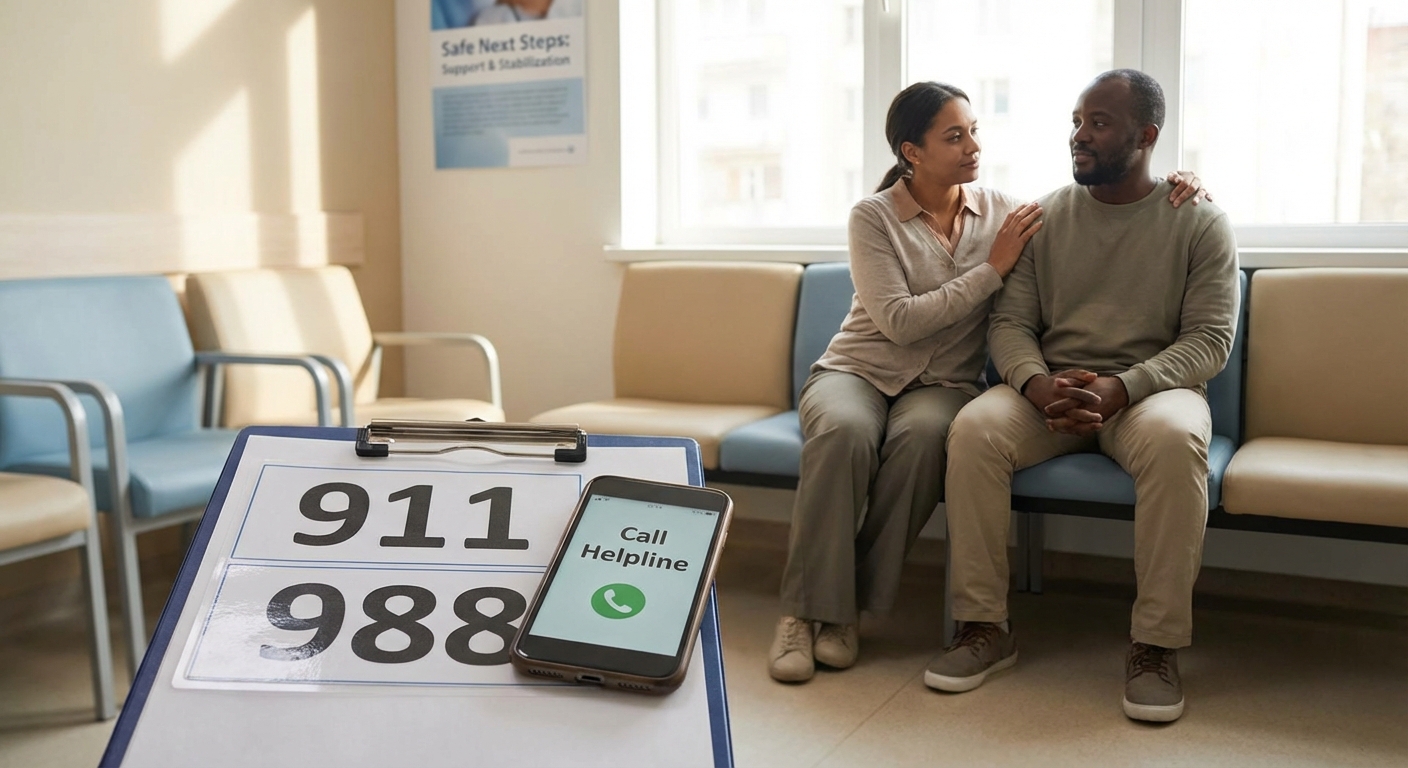
Not finding a bed immediately does not mean you failed or that help is not available. It often means capacity is tight. These options can keep you safer while you keep searching.
Option 1: Emergency room for dangerous or complicated withdrawal
Go to the ER or call 911 if you have severe symptoms or are at risk for complications, especially with alcohol or benzodiazepines. Seek urgent care if you experience:
- Seizures, severe shaking, or confusion
- Hallucinations
- Chest pain, fainting, trouble breathing
- Uncontrolled vomiting or signs of dehydration
- Suicidal thoughts or self-harm urges
Option 2: Ask about outpatient stabilization while you wait
Some people can be supported safely with intensive outpatient monitoring, medication management, and frequent check-ins depending on risk. This is not right for everyone, but it can be a bridge when residential detox is not immediately available.
Option 3: Contact referral lines for rapid placement help
If you are stuck, referral services can help you identify appropriate Medi-Cal detox centers Inland Empire and nearby areas, and sometimes locate openings faster than calling randomly.
For national treatment referrals and information, SAMHSA’s National Helpline is free, confidential, and available 24/7/365: https://www.samhsa.gov/find-help/helplines/national-helpline.
What Drug Medi-Cal withdrawal management can look like in real life
Many IEHP members are navigating a Medi-Cal system where services are organized by levels of care and documentation of medical necessity. A typical pathway may include:
- Screening and assessment (by phone or in person)
- Placement into withdrawal management (appropriate level based on risk)
- Step-down into treatment (residential or outpatient)
- Ongoing supports such as therapy, recovery coaching, case management, and peer support
- Medication treatment when appropriate (for example, medications for opioid use disorder)
Even if you are only focused on getting through the next 24 hours, it helps to ask, “What happens after detox?” A good plan reduces the risk of relapse after withdrawal symptoms ease. If you want a second perspective that’s more step-by-step and logistics-focused, ADR also has a practical checklist: IEHP covered rehab steps to confirm benefits.
A calling script you can copy and use
If you are overwhelmed, you can read this word-for-word:
Hi, I am looking for a detox or withdrawal management program. I have IEHP through Medi-Cal. Can you confirm you are in-network with IEHP for detox, verify my eligibility today, and tell me if you have an opening for admission? Also, do you need a referral or prior authorization, and who handles that paperwork?
Related reading on Drug Addiction Now
- IEHP Guide for Addiction and Mental Health Care
- Detox Programs in San Bernardino That Accept IEHP Insurance
- What Rehab Facilities Do and How They Help
Bottom line
Finding detox centers that take IEHP is possible, but it often requires a more specific approach than a simple web search. Focus on three essentials: confirm the detox level you need, confirm in-network status for that specific service, and ask directly about same-day assessment and admissions steps.
If you are scared about withdrawal, you do not have to make this decision alone. If you cannot get a detox bed quickly and symptoms feel dangerous, prioritize urgent medical care first. Coverage and placement can be worked out after you are safe.
Frequently Asked Questions
How do I find detox centers that take IEHP right now?
Start by calling IEHP member services or using the provider directory to identify in-network options, then call facilities directly and ask for “withdrawal management” or “detox” admissions. Confirm they are in-network for IEHP for detox (not just counseling) and ask about same-day assessment and bed availability.
What does IEHP detox coverage usually include?
IEHP detox coverage can include medically necessary withdrawal management services when delivered by the appropriate type of program and through the correct network pathway. Coverage can depend on your plan, medical necessity, provider contracting, and whether authorization or referrals are required.
Is medical detox with IEHP different from residential rehab?
Yes. Medical detox focuses on safely managing withdrawal symptoms and complications. Residential rehab is longer-term treatment focused on therapy, structure, and relapse prevention. Some residential programs can handle mild withdrawal, but higher-risk withdrawal may require medically monitored care first.
Do Drug Medi-Cal withdrawal management services require prior authorization?
Sometimes. Requirements vary by program, level of care, and local system rules. Ask the admissions team and IEHP whether authorization is required and who submits it. If you are in crisis, ask about emergency pathways and immediate evaluation options.
What if I cannot find a Medi-Cal detox center in the Inland Empire with an open bed?
If withdrawal symptoms are severe, go to the ER or call 911. If symptoms are manageable, ask about outpatient stabilization while you continue calling, request waitlist placement, and contact referral resources like SAMHSA’s National Helpline for help locating programs.
Need Help Now?
If you or someone you love is struggling with addiction, help is available 24/7.
- SAMHSA National Helpline: 1-800-662-4357 (free, confidential, 24/7)
- Crisis Text Line: Text HOME to 741741
- National Suicide Prevention Lifeline: 988
If you are looking for supportive, non-clinical tools while you pursue treatment placement, ALT has a wellness-focused guide: meditation for addiction recovery (practical steps).
Recovery is possible. Take the first step today.
Find Help Near You
High Desert Dual Diagnosis Support
12274 Palmdale Rd, Victorville, CA 92392
Phone: (442) 291-6209