


Co-Occuring Disorders and Dual Diagnosis Treatment
If you typed “co-occuring” into a search bar, you are not alone. Many people use that spelling when they are trying to understand co-occurring disorders, also known as dual diagnosis. This term describes a situation where someone experiences a substance use disorder and a mental health condition at the same time.
When both are happening together, it can feel confusing and overwhelming, especially for families who are watching someone they love struggle. The good news is that dual diagnosis is treatable, and outcomes improve when care addresses mental health and addiction together through integrated treatment.
What “co-occuring” usually means
In everyday conversation, “co-occuring” is almost always used to mean co-occurring disorders. Clinically, it refers to:
- A substance use disorder (SUD) – such as alcohol use disorder, opioid use disorder, stimulant use disorder, or another drug addiction
- A mental health disorder – such as depression, anxiety disorders, PTSD, bipolar disorder, ADHD, or schizophrenia spectrum disorders
You might also hear the terms dual diagnosis or comorbidity. “Comorbidity” is broader and can refer to any two conditions that occur together, but in addiction care it often points to this same mental health plus substance use overlap. For a deeper breakdown of how the term is used in treatment settings, see our guide on the meaning of “co-occuring” in dual diagnosis care.
How common are co-occurring disorders?
Co-occurring disorders are not rare, even though many people feel isolated when they are in the middle of it. According to the 2023 National Survey on Drug Use and Health (NSDUH), an estimated 20.4 million adults in the United States had both a mental illness and a substance use disorder in the past year.
Source: SAMHSA 2023 NSDUH Annual National Report
Why co-occurring disorders can feel so hard to untangle
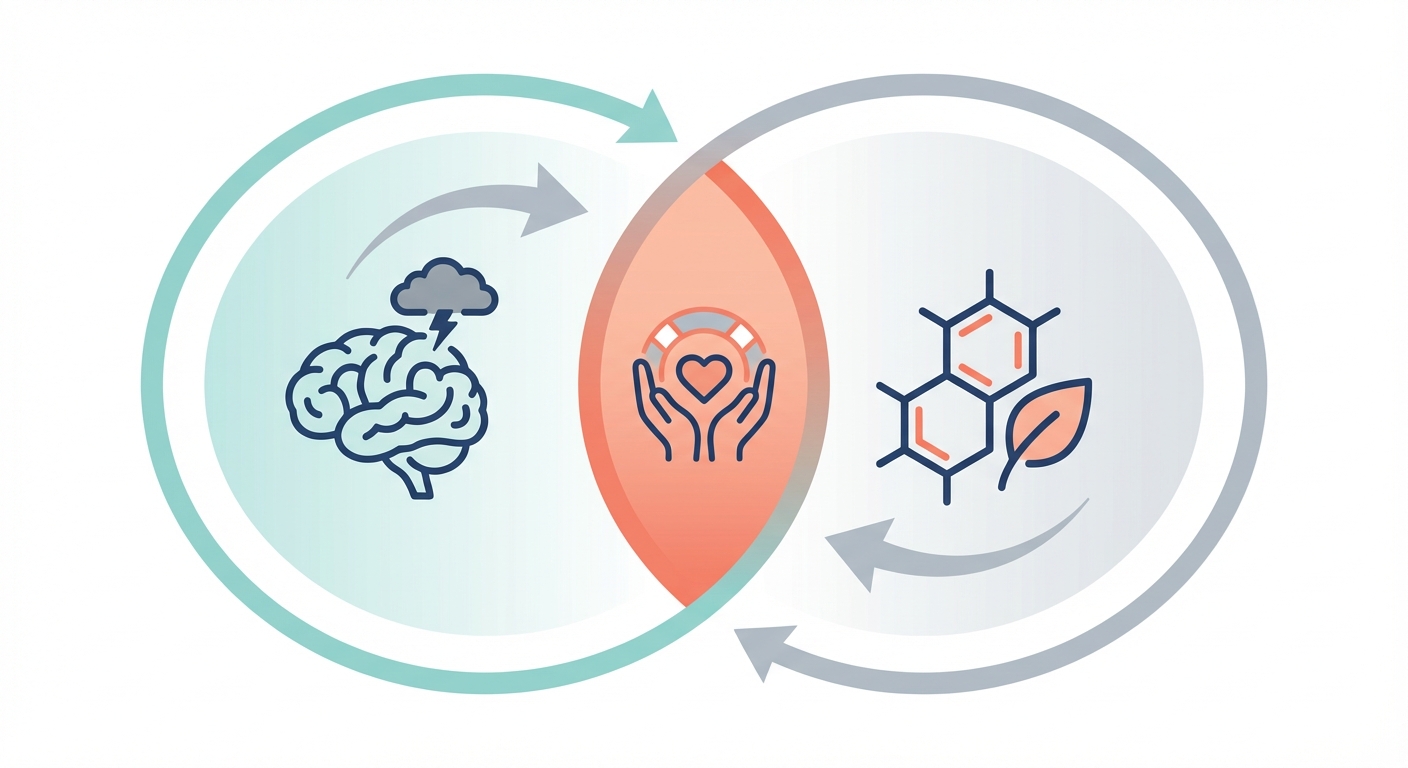
When someone is dealing with both mental health symptoms and substance use, each can intensify the other. For example:
- A person may drink or use drugs to numb panic, trauma memories, depression, or insomnia.
- Substance use can worsen mood, sleep, anxiety, paranoia, and impulse control.
- Withdrawal can mimic or trigger psychiatric symptoms such as agitation, depression, or intense anxiety.
This feedback loop can make recovery feel like chasing two moving targets. That is why many experts emphasize integrated treatment, meaning one coordinated plan that treats both conditions at the same time. If you want a more step-by-step explanation of what integrated care can look like, read how dual diagnosis care works in real treatment programs.
Common co-occurring combinations
Any mental health condition can co-occur with any substance use disorder, but some combinations are seen frequently in treatment settings:
- Depression and alcohol use – alcohol can deepen depressive symptoms over time and increase suicide risk
- Anxiety and benzodiazepine misuse – especially when someone starts using more than prescribed, or uses benzos with alcohol or opioids
- PTSD and alcohol, opioids, or stimulants – substances may be used to manage nightmares, hypervigilance, or emotional shutdown
- Bipolar disorder and stimulant or alcohol use – substances can intensify mood cycling and impair judgment during mania
- ADHD and stimulant misuse – including non-prescribed use of medications or using to stay awake or focus
- Psychotic disorders and cannabis or stimulants – some substances can worsen paranoia and hallucinations, especially at high doses
Important: Symptoms can overlap. For instance, stimulant use can cause anxiety and paranoia, and heavy alcohol use can cause symptoms that look like depression. A qualified clinician can help determine what is substance-induced, what is pre-existing, and what needs treatment now.
Signs someone may have a co-occuring condition
Co-occurring disorders do not always present in a clear, textbook way. Sometimes the substance use is obvious and the mental health symptoms are hidden, or the mental health crisis is visible while addiction stays in the background.
Substance use signs
- Using substances to sleep, calm down, stop racing thoughts, or “feel normal”
- Needing more to get the same effect (tolerance)
- Withdrawal symptoms when cutting down or stopping
- Repeated unsuccessful attempts to quit
- Continuing use despite health, legal, family, or work consequences
Mental health signs
- Ongoing sadness, numbness, hopelessness, or loss of interest
- Excessive worry, panic attacks, irritability, or feeling “on edge”
- Flashbacks, nightmares, avoidance, or being easily startled (often linked with trauma)
- Significant mood swings, impulsive behavior, or periods of unusually high energy
- Sleep problems, changes in appetite, difficulty functioning at work or school
Combined red flags that suggest dual diagnosis
- Mental health symptoms get worse when substance use increases, or when the person tries to stop
- Relapse happens after stress, conflict, grief, or trauma reminders
- Multiple detox attempts without long-term stability
- Frequent ER visits, blackouts, self-harm behaviors, or risky mixing of substances
- Isolation, relationship breakdown, or escalating legal and financial problems
Does addiction cause mental illness, or does mental illness cause addiction?
Sometimes the honest answer is: it depends, and it can be both.
- Some people have mental health symptoms first and turn to substances to cope.
- Some people develop anxiety, depression, or psychosis symptoms after heavy or prolonged substance use.
- Many people have shared risk factors such as genetics, early trauma, chronic stress, unstable housing, or untreated medical issues.
Instead of trying to solve the timeline immediately, most clinicians focus on what is happening now and what supports safety and stability. Screening and treating both conditions together is often the safest approach.
Why integrated treatment is the standard for dual diagnosis
Integrated treatment means that mental health care and addiction treatment are not separate tracks. They are part of one coordinated plan, ideally within the same program or closely connected providers.
Programs that specialize in co-occurring disorders often include:
- Medical and psychiatric assessment
- Evidence-based therapy that addresses both substance use and mental health symptoms
- Medication management when appropriate, including medications for addiction treatment
- Trauma-informed care and safety planning
- Relapse prevention that includes mental health triggers
- Aftercare planning with ongoing therapy, psychiatry, and peer support
If you want a practical overview of what treatment settings are designed to do (and what to look for), see the role of rehab facilities in addiction recovery.
What evidence-based dual diagnosis treatment can include
1) A thorough assessment that does not rush
A quality dual diagnosis assessment looks beyond the substance itself. It should consider:
- Current substances used, frequency, and overdose risk
- Withdrawal risk (especially alcohol and benzodiazepines, which can be dangerous to stop abruptly)
- Mental health symptoms, trauma history, and past diagnoses
- Suicide risk and self-harm risk
- Medical conditions, pain, sleep issues, and current medications
2) Therapy approaches that work for both
Many of the most effective therapies for substance use are also useful for mental health recovery, including:
- Cognitive Behavioral Therapy (CBT) – helps identify thought patterns and behaviors that fuel both cravings and mental health symptoms
- Dialectical Behavior Therapy (DBT) – teaches emotion regulation, distress tolerance, and interpersonal effectiveness (often helpful for self-harm risk and intense mood swings)
- Motivational Interviewing (MI) – builds readiness and confidence without shame or pressure
- Trauma-informed therapy – recognizes how trauma can shape substance use and stress responses
Note: Trauma processing therapies are sometimes introduced after a person is medically stable and has basic coping skills, especially if withdrawal or severe symptoms are present.
3) Medications, when clinically appropriate
Medication can be a key part of care for either condition, and it should be managed by qualified professionals who understand interactions and addiction risk. Depending on the individual, this might include:
- Medications for opioid use disorder such as buprenorphine or methadone, which reduce cravings and overdose risk
- Medications for alcohol use disorder such as naltrexone or acamprosate for relapse prevention (when appropriate)
- Antidepressants for depression or anxiety disorders
- Mood stabilizers for bipolar disorder
- Non-addictive sleep supports when insomnia is a major trigger
Do not stop alcohol, benzodiazepines, or prescribed psychiatric medications suddenly without medical guidance. Withdrawal and rebound symptoms can be severe and, in some cases, life-threatening. If you’re unsure what level of medical support is appropriate, ADR’s practical guide to inpatient dual diagnosis treatment (what to know) can help you understand when 24/7 care may be recommended.
4) Levels of care that match real-world risk
Dual diagnosis support can happen at different levels, and the right level depends on safety, stability, and symptom severity:
- Medical detox – for withdrawal management and stabilization
- Inpatient or residential treatment – structured 24/7 support for higher-risk situations
- Partial hospitalization (PHP) – intensive day treatment with housing at home or in supportive living
- Intensive outpatient (IOP) – several sessions per week, often paired with work or family responsibilities
- Outpatient therapy and psychiatry – ongoing support as symptoms stabilize
Many people start by learning what detox can (and can’t) do. For readers using IEHP, DAN has a helpful checklist in what to ask detox centers that take IEHP.
How to choose a co-occuring or dual diagnosis program
When you are calling programs, it helps to ask direct questions. You deserve clear answers.
Questions to ask
- Do you provide integrated treatment for co-occurring disorders?
- Is a psychiatrist or psychiatric nurse practitioner available for evaluation and medication management?
- How do you screen for suicide risk, trauma, and severe mental illness?
- What therapies do you use (CBT, DBT, trauma-informed approaches)?
- How do you handle medications that have misuse risk, like benzodiazepines?
- What does discharge planning and aftercare include?
Red flags to watch for
- They treat addiction first and say mental health will be addressed later, without a real plan
- There is no qualified mental health staffing or no psychiatric care available
- They promise a “quick fix” without ongoing care planning
- They do not discuss safety planning, overdose prevention, or crisis supports
If you are worried about a loved one

Watching someone cycle between mental health distress and substance use can be exhausting and heartbreaking. If you are supporting someone with a possible dual diagnosis, these approaches often help:
- Prioritize safety – overdose risk, self-harm risk, and dangerous withdrawal come first
- Encourage assessment over labels – “Can we talk to a professional?” can land better than “You have a disorder.”
- Offer specific support – rides to appointments, help making calls, sitting with them during intake
- Set boundaries with compassion – boundaries protect relationships and reduce chaos
- Get support for yourself – family therapy, peer groups, and counseling can help you stay steady
If your loved one is open to adding supportive wellness practices alongside clinical care, ALT has a reader-friendly overview of holistic therapy options for addiction recovery (often used as complements to evidence-based treatment, not replacements).
When to seek emergency help
Get immediate help if someone:
- Talks about suicide, self-harm, or feels unable to stay safe
- Shows signs of overdose such as slow or stopped breathing, blue lips or fingertips, or cannot be awakened
- Has seizures, severe confusion, hallucinations, or extreme agitation
- Has severe alcohol or benzodiazepine withdrawal symptoms
In the United States, call 911 for immediate danger. For mental health crisis support, call or text 988 (Suicide and Crisis Lifeline).
Key takeaway
Co-occuring is most often a search term for co-occurring disorders or dual diagnosis, where substance use and mental health conditions happen at the same time. The most effective care is typically integrated treatment that supports both conditions together, with appropriate medical oversight, therapy, and long-term aftercare.
Frequently Asked Questions
What does co-occuring mean in addiction treatment?
“Co-occuring” usually refers to co-occurring disorders, meaning a substance use disorder and a mental health condition happening at the same time. You may also hear it called dual diagnosis.
What are the most common co-occurring disorders?
Common combinations include depression with alcohol use, anxiety with alcohol or benzodiazepine misuse, PTSD with alcohol or opioids, and bipolar disorder with alcohol or stimulant use. Many combinations are possible, and symptoms can overlap.
Why is integrated treatment important for dual diagnosis?
Integrated treatment addresses mental health and addiction together in one coordinated plan. Treating only one side often leads to relapse or recurring mental health symptoms because the conditions can reinforce each other.
Can detox treat co-occurring disorders?
Detox can help stabilize withdrawal and immediate safety concerns, but it usually does not fully treat co-occurring disorders. Ongoing therapy, psychiatric care, and aftercare planning are typically needed for lasting recovery.
How do I know if symptoms are caused by drugs or an underlying mental health disorder?
Some substances and withdrawal states can mimic depression, anxiety, or psychosis. A clinician can assess timing, history, and symptom patterns to determine what is substance-induced and what may be an underlying condition that needs treatment.
Need Help Now?
If you or someone you love is struggling with addiction, help is available 24/7.
- SAMHSA National Helpline: 1-800-662-4357 (free, confidential, 24/7)
- Crisis Text Line: Text HOME to 741741
- National Suicide Prevention Lifeline: 988
Recovery is possible. Take the first step today.
Find Help Near You
Temecula Parkway Emotional Link
32605 Temecula Pkwy, Temecula, CA 92592
Phone: (951) 631-0719