
If you are an Indiana parent or expecting one, few searches feel more urgent than this: will my newborn be drug tested, and can the Department of Child Services (DCS) take my baby over a positive screen? The fear is real, the stakes are enormous, and the information online is fragmented. This report connects Indiana’s actual DCS rules to current substance trends, then walks through the rights and process questions parents are panicking over.
What’s actually happening: prenatal substance exposure cases and DCS involvement in Indiana right now
As of 2025, prenatal substance exposure remains one of the most common reasons newborns come to the attention of Indiana DCS. Federal law — specifically the Comprehensive Addiction and Recovery Act (CARA) and the Child Abuse Prevention and Treatment Act (CAPTA) — requires healthcare providers to notify child welfare agencies when an infant is identified as affected by substance use or withdrawal symptoms. This is a notification, not an automatic removal.
The substances driving these cases have shifted. Illicit fentanyl and methamphetamine now dominate the picture nationally, while marijuana detection has risen sharply as cannabis remains illegal in Indiana even as neighboring states legalize it. Indiana hospitals are increasingly tracking maternal drug use, and a positive marijuana screen can still trigger a report even though the clinical risk profile differs from opioids, according to local reporting on how Indiana hospitals track maternal substance use.
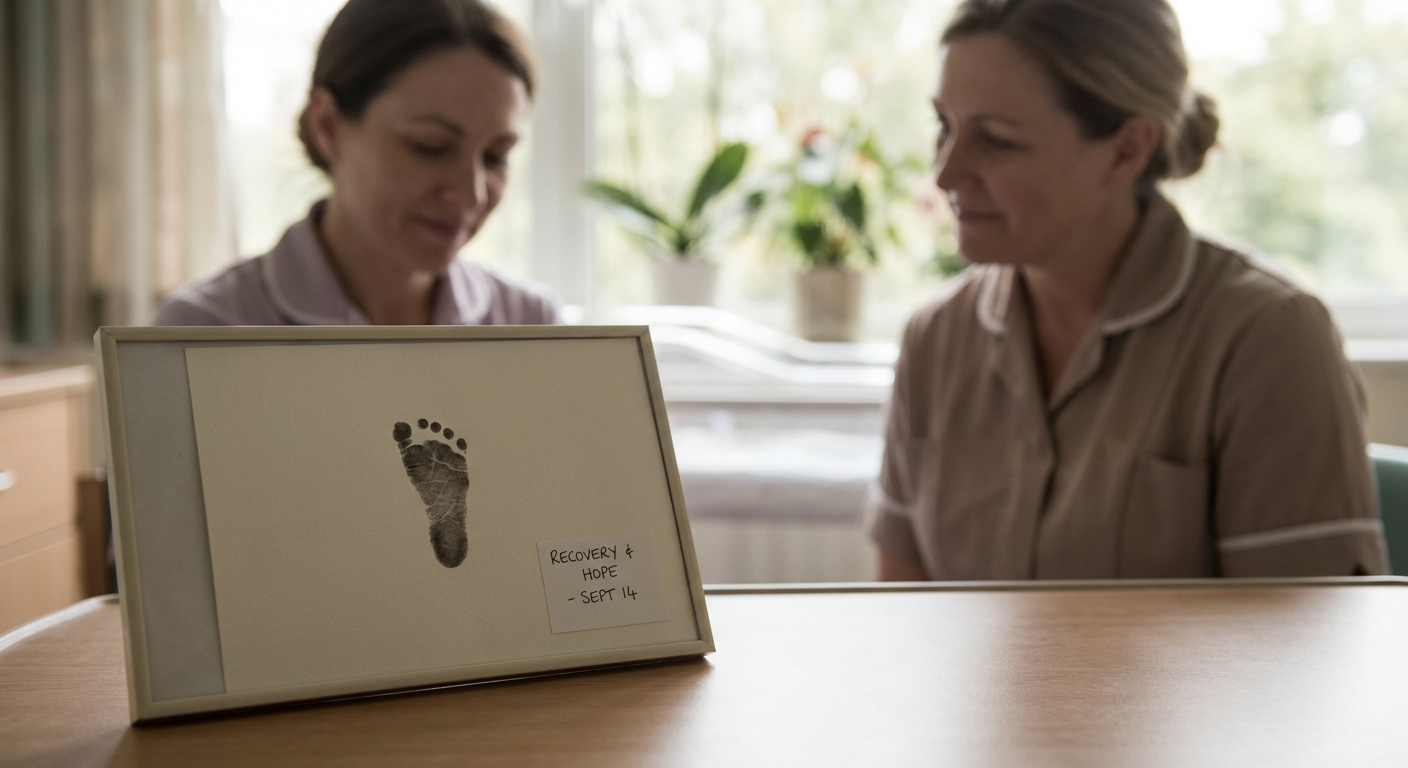
The key takeaway: a notification to DCS sets a process in motion, but the outcome depends on assessment findings, the substance involved, and whether there is credible evidence the child is at risk of harm. Removal is the exception, not the rule.
Are all Indiana newborns drug tested at birth — hospital screening policies vs. legal requirements
No Indiana law requires every newborn to be drug tested. Testing decisions are made by hospitals and clinicians based on their own policies and clinical indicators — not a statewide mandate.
Hospitals typically order a newborn or maternal toxicology screen when certain risk factors are present, such as:
- Limited or no prenatal care
- A documented history of substance use disorder
- Maternal behavior or symptoms suggesting intoxication or withdrawal
- Unexplained placental abruption or other complications
- A positive prenatal screen earlier in the pregnancy
Some hospitals screen more broadly; others test only with consent or clinical cause. Methods vary too — a urine screen on the mother, or a meconium (first stool) or umbilical cord sample from the newborn, which can detect exposure across the later months of pregnancy. Because policies differ by facility, two parents in different Indiana counties can have very different experiences.
What Indiana DCS policy 4.40 actually says about drug screening and assessment outcomes
The governing document is DCS Policy 4.40, supplemented by Policy 4.40 on Drug Screening in Assessments. The policy frames drug screening as one tool within a broader assessment — not the sole basis for any decision.
Under 4.40, a Family Case Manager may request a drug screen during an assessment when there is reasonable cause to believe substance use is affecting a child’s safety. A positive result alone does not establish abuse or neglect. The policy directs case managers to weigh the screen against the full picture: the parent’s functioning, the home environment, the child’s condition, and any supports already in place.
For drug-testing methodology, the standards align with federal guidance summarized by the National Center on Substance Abuse and Child Welfare, which emphasizes that a single positive test is a snapshot, not proof of impairment or risk. Confirmation testing and clinical context matter.
Which drugs trigger DCS action — marijuana vs. opioids/fentanyl/meth and how they’re treated differently
Not all positive screens are treated equally, even though all may generate a report.
Opioids, fentanyl, and methamphetamine
These substances are treated most seriously. Illicit fentanyl carries acute overdose risk and is often involved in environments DCS considers high-risk for an infant. Methamphetamine exposure raises concerns about caregiver functioning and home safety. Newborns exposed to opioids may also develop neonatal abstinence syndrome (NAS), requiring medical monitoring — which intensifies DCS attention.
Marijuana
Marijuana sits in a gray zone. It remains illegal in Indiana, so a positive screen can trigger a report. But case outcomes increasingly turn on whether there is actual evidence of harm or impaired caregiving rather than the mere presence of THC. Parents should not assume a marijuana-only positive guarantees removal — but they also should not assume it will be ignored.
Prescribed medications
A positive result from a legitimate prescription — including medication-assisted treatment such as buprenorphine or methadone for opioid use disorder — should not be treated as evidence of neglect. Document your prescriptions; treatment for a substance use disorder is a protective factor, not a strike against you.
Can DCS take your newborn over a positive test — the “credible evidence of harm” standard
This is the question that brings most parents here. The short answer: a positive test alone is generally not enough to remove a newborn. Indiana requires credible evidence that the child is endangered.
Removal in Indiana typically requires either a court order or an emergency determination that the child faces an immediate threat to safety. DCS must then promptly bring the case before a juvenile court, which reviews whether removal was justified. The legal threshold focuses on actual or imminent risk of harm — not simply the existence of a positive screen.
A positive newborn drug test is a trigger for assessment and notification. It is not, by itself, a legal basis to remove a child from a safe, capable parent.
In practice, whether a newborn is removed depends on factors like the substance involved, the parent’s engagement with treatment, the safety of the home, the availability of a sober caregiver, and whether a Plan of Safe Care can address the concerns without separation.
Plans of Safe Care: Indiana’s federally-mandated alternative to removal
Federal law requires states to develop a Plan of Safe Care for infants affected by prenatal substance exposure — and crucially, this is intended as an alternative to removal, not a precursor to it. Indiana’s framework is described by the Children’s Bureau summary of Indiana’s Plans of Safe Care.

A Plan of Safe Care is a coordinated set of supports addressing both the infant’s health and the caregiver’s needs. It can include:
- Substance use treatment and recovery support for the parent
- Pediatric follow-up and developmental monitoring for the infant
- Home visiting services and parenting support
- Coordination with medical providers and community resources
The goal is to keep families together safely. Engaging with a Plan of Safe Care — rather than resisting it — is one of the clearest ways a parent can demonstrate that the child can remain in the home.
Your rights as a parent — refusing tests, court orders, and what to do in the first 48 hours
Knowing your rights early can shape the entire case. A few points parents most often ask about:
Do I have to take a DCS drug test, and what about the first visit?
You can decline a voluntary drug screen request. However, DCS may interpret a refusal as a factor in its assessment, and the agency can seek a court order compelling testing. Many parents ask whether CPS will drug test on the first visit — they can request one, but you are not legally obligated to submit to a voluntary screen without a court order. Weigh the optics carefully and, when possible, consult an attorney before deciding.
How long does it take to get a court order for a drug test in Indiana?
There is no fixed timeline. If DCS believes a screen is necessary and you decline, the agency can petition the court, and a judge can issue an order quickly — sometimes within days — particularly in cases involving an infant. Emergency situations can move even faster.
How many times can DCS drug test you?
There is no single statutory cap. During an open assessment or case, DCS may request multiple screens, especially if a Plan of Safe Care or court order involves ongoing monitoring of sobriety. Frequency generally tracks the perceived risk and the terms of any agreement or court order.
The first 48 hours checklist
- Stay calm and cooperative without admitting to anything you’re unsure about.
- Ask DCS to explain, in writing if possible, why they are involved and what they’re requesting.
- Gather documentation of any legitimate prescriptions, including MAT.
- Identify a sober support person or relative who could serve as a temporary caregiver if needed.
- Contact an attorney — many counties have public defenders for parents in DCS cases.
- Begin or document engagement with treatment if substance use is a factor.
For parents searching for a free CPS newborn drug test in Indiana, note that testing in DCS cases is typically arranged and paid for by the agency; you generally are not asked to fund agency-ordered screens yourself.
The data driving this: NIDA/CDC/SAMHSA stats on substance use in pregnancy
The policy framework exists because prenatal substance exposure is a measurable public health issue. National data from federal agencies show that a meaningful share of pregnant people report past-month use of alcohol, tobacco, marijuana, or illicit substances, and that opioid use disorder during pregnancy and neonatal abstinence syndrome rose substantially over the past two decades. More recently, illicit fentanyl has driven overdose deaths among women of reproductive age to historic highs.
These trends — preliminary in some of the most recent years and still being finalized — are why Indiana hospitals screen and why federal law mandates notification and Plans of Safe Care. The intent of the system, at least on paper, is to connect families to treatment and support rather than to punish. Whether that intent is realized often depends on how informed and prepared a parent is when DCS makes contact.
Frequently Asked Questions
Do all newborn babies get tested for drugs?
No. Indiana has no law requiring universal newborn drug testing. Hospitals decide based on their own policies and clinical risk factors such as limited prenatal care, a history of substance use, or symptoms of intoxication or withdrawal.
Can CPS take my newborn if I fail a drug test?
Not on the test alone. Indiana requires credible evidence that the child faces actual or imminent harm. A positive screen triggers assessment, but removal generally requires a court order or an emergency safety determination reviewed by a juvenile court.
Do I have to take a drug test for CPS in Indiana?
You can decline a voluntary screen, but DCS may treat a refusal as a factor and can seek a court order compelling testing. Consider consulting an attorney before deciding how to respond.
What kind of drug test does Indiana DCS use?
DCS commonly uses urine screens, and may use hair, saliva, or nail testing depending on the situation. For newborns, hospitals may use maternal urine or infant meconium or umbilical cord samples. Confirmation testing and clinical context are weighed alongside any result under Policy 4.40.
Will CPS drug test on the first visit?
They may request one, but you are not legally required to submit to a voluntary screen without a court order. A first-visit request is common when substance use is the reported concern.