
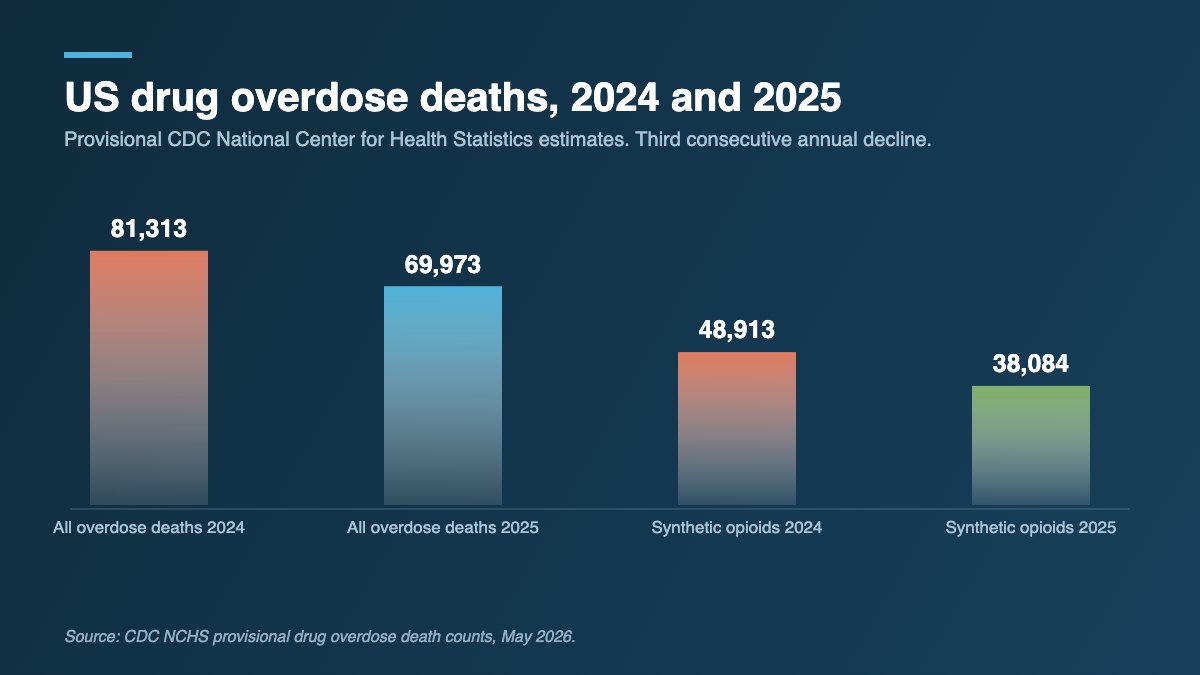
Overdose deaths in the United States have now fallen for three consecutive years. According to provisional CDC figures, an estimated 69,973 people died of a drug overdose in 2025, down almost 14 percent from 81,313 in 2024. The decline is real, it is large, and understanding what is behind it matters more than celebrating it.
What the numbers actually show
The National Center for Health Statistics reported that overdose deaths involving opioids dropped from roughly 55,300 in 2024 to about 44,600 in 2025. Deaths involving synthetic opioids, overwhelmingly illicitly manufactured fentanyl, fell from approximately 48,900 to 38,100, a decrease of 22 percent. Deaths involving cocaine and psychostimulants such as methamphetamine also declined.
Preliminary data for the twelve months ending January 2026 predicted 69,147 deaths, a 13.2 percent decline against the same period a year earlier. The trend has held.
The decline is not evenly distributed
Almost every state recorded a decrease, and the size of that decrease varies enormously. Rhode Island, New York, North Carolina, Alabama and Vermont saw declines of 25 percent or more. New Mexico, Arizona and Colorado went the other way, with increases of 10 percent or more compared with the same period in 2024.
That divergence is the part worth paying attention to. A national average of minus 14 percent conceals states where the crisis is still worsening, and it is a reminder that overdose mortality responds to local conditions: what is in the local drug supply, how easy naloxone is to obtain, whether medication for opioid use disorder is genuinely accessible, and what happens to people in the two weeks after they leave jail.
What appears to be working
No single intervention explains a drop of this size, and researchers are careful about causal claims. Four factors come up consistently.
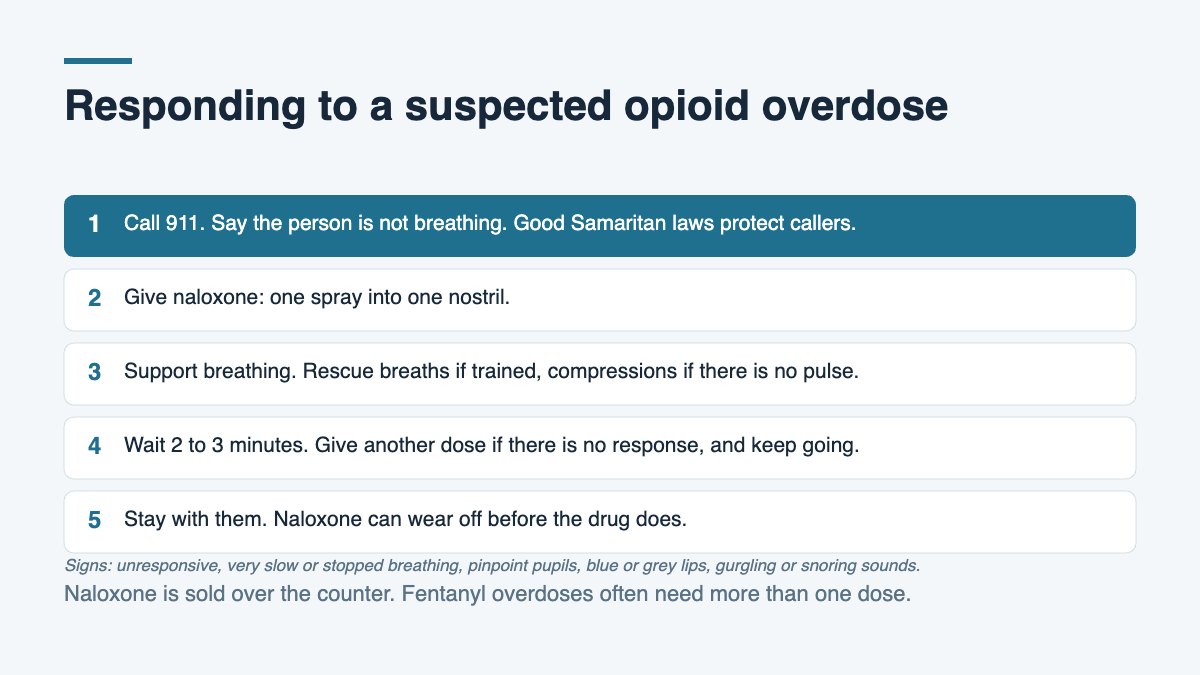
Naloxone saturation. Naloxone nasal spray became available over the counter without a prescription following FDA approval for nonprescription sale, and state distribution programs have pushed millions of doses into circulation. When bystanders have naloxone in a bag or a glove compartment, overdoses that would have been fatal become survivable.
Wider access to treatment medication. The elimination of the federal X-waiver means any clinician with a standard DEA registration can now prescribe buprenorphine, and pandemic era flexibilities for methadone take-home dosing were made permanent. Medication for opioid use disorder roughly halves mortality compared with counseling alone.
Changes in the drug supply. Some analysts point to shifts in fentanyl composition and adulterants, including the spread of xylazine, which alters overdose presentation in ways that are not fully understood.
Depletion of the at-risk population. This is the explanation nobody wants to state plainly. Part of the decline reflects the fact that so many people at highest risk have already died. It is not a public health success, and any honest reading of the data has to include it.
What has not changed
Roughly 70,000 people a year are still dying. That is more than the annual toll from car crashes and firearms combined for most of the last decade. Illicit fentanyl remains dominant, counterfeit pills pressed to look like oxycodone, Xanax and Adderall continue to circulate through social media, and stimulant users who have no opioid tolerance are still being killed by contaminated supply.
Treatment access also remains the weak point. A minority of people with opioid use disorder receive medication for it in any given year. Detox without follow-on treatment continues to be offered and continues to raise overdose risk, because tolerance falls while nothing else about the person’s situation has changed.
Practical takeaways
- If opioids are anywhere in your household, keep naloxone. It is over the counter, it is free through many state and county programs, and fentanyl overdoses often require more than one dose.
- Treat any pill not from a pharmacy as fentanyl of unknown strength. Visual inspection cannot distinguish counterfeits.
- The two weeks after jail, hospital or detox are the highest risk period of all, because tolerance has collapsed. Plan for it explicitly.
- Ask any treatment program whether it prescribes buprenorphine or methadone. A program that declines to offer the intervention with the strongest mortality evidence is telling you something important.
Sources
- CDC National Center for Health Statistics, provisional drug overdose death counts, press release of May 13, 2026
- CDC, Overdose Prevention data and resources
- National Institute on Drug Abuse, medications to treat opioid use disorder
- FDA, approval of naloxone nasal spray for over-the-counter sale
Need help now? In an emergency call 911. If you are in crisis or thinking about suicide, call or text 988 (Suicide and Crisis Lifeline; veterans press 1). For free, confidential treatment referrals 24 hours a day, call the SAMHSA National Helpline at 1-800-662-4357. You can also search licensed programs at FindTreatment.gov, or use our rehab directory and state listings.
Addiction Now publishes health journalism and reference material. This page is not medical advice, a diagnosis, or a treatment plan. Do not stop a prescribed medication without talking to a clinician. Withdrawal from alcohol, benzodiazepines and barbiturates can cause seizures and can be fatal without medical supervision.