

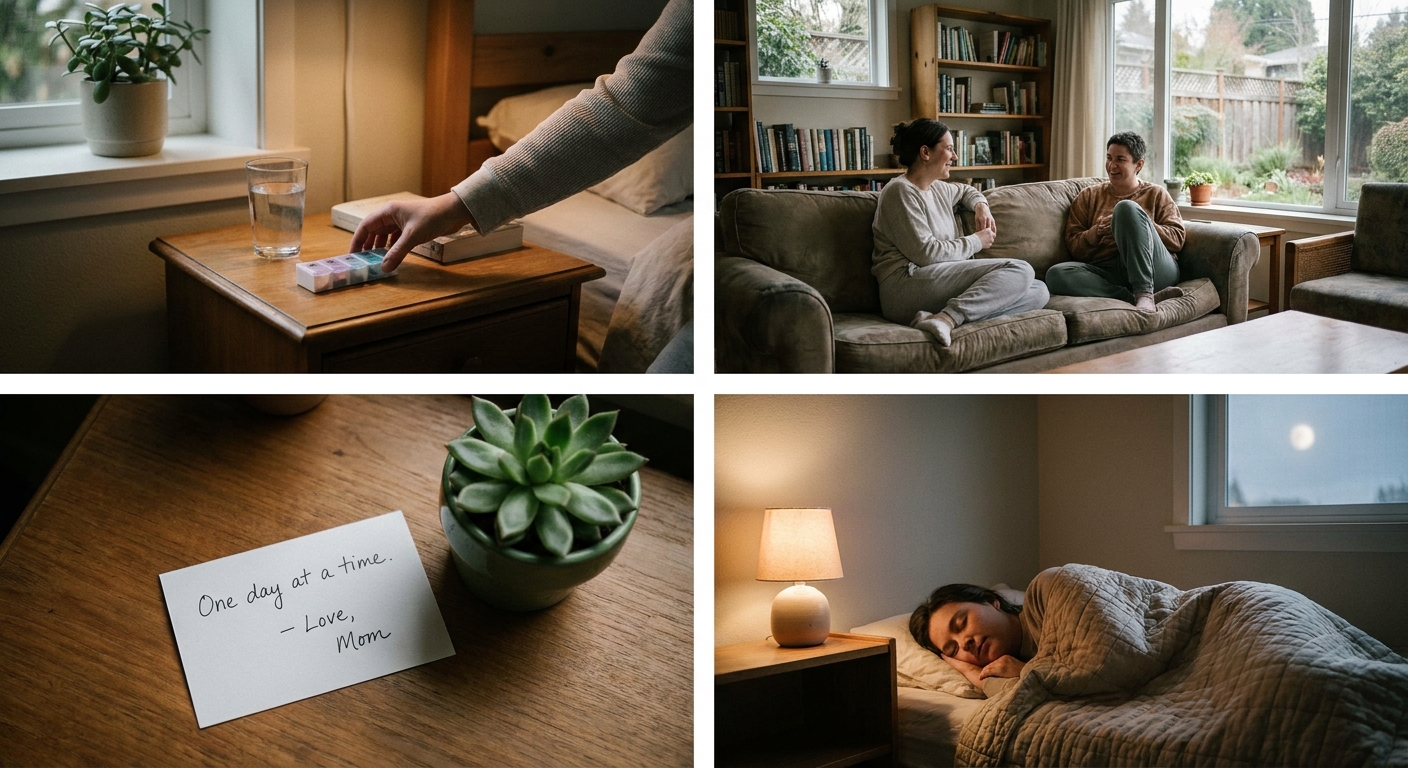
Ambien and Lunesta are two of the most commonly discussed prescription sleep medicines in the United States. They are often compared because both are “Z-drugs,” both are controlled substances, and both can help some people fall asleep when insomnia is severe or persistent. But the practical differences matter: they do not last the same amount of time, they are not interchangeable, and neither is risk-free.
This comparison explains Ambien versus Lunesta in plain terms, including sleep effects, next-day impairment, side effects, dependence, dangerous drug combinations, and what to ask a clinician before starting or switching medications. It is for education only and is not a substitute for medical advice.
What Ambien and Lunesta are and why they’re compared
Ambien is the brand name for zolpidem. Lunesta is the brand name for eszopiclone. Both are prescription hypnotics used for insomnia, and both act on GABA-related receptors in the brain to promote sedation. They are sometimes called non-benzodiazepine sedative-hypnotics because they are chemically different from benzodiazepines but can produce similar sleep-promoting and impairing effects.
The two are compared because they are prescribed for overlapping reasons: trouble falling asleep, trouble staying asleep, or both. According to a clinical comparison from Drugs.com’s medical answer on Lunesta and Ambien, both medications are approved for insomnia, but their formulations and duration of action differ. Ambien comes in immediate-release and extended-release forms, while Lunesta is generally longer acting than immediate-release Ambien.

They are also compared because patients often ask about real-world differences: “Lunesta vs Ambien which is stronger?” “Can I take Lunesta and Ambien together?” “What is the Ambien to Lunesta dose conversion?” These are reasonable questions, but the answers depend on age, other medicines, liver function, substance use history, and the type of insomnia being treated.
Key differences in onset, duration, and insomnia type treated
Ambien immediate-release is generally designed for sleep onset insomnia: the problem of falling asleep. It tends to work quickly, so it is taken right before bed, only when a person can devote a full night to sleep. Ambien CR, the controlled-release version, has a layer intended to help with sleep onset and another that may help with staying asleep.
Lunesta also helps with sleep onset, but because it tends to last longer, it is often discussed for people who wake during the night or struggle with sleep maintenance. WebMD’s comparison of Ambien and Lunesta notes that the drugs differ in how long they remain active and in the types of insomnia symptoms they may be used to treat.
Sonata, the brand name for zaleplon, is another Z-drug sometimes included in comparisons such as Ambien vs Lunesta vs Sonata. Sonata has a shorter duration and is typically more focused on falling asleep rather than staying asleep. That short action may reduce next-morning sedation for some patients, but it may not help people who wake repeatedly overnight.
Another common comparison is Lunesta vs Ambien vs trazodone. Trazodone is not a Z-drug; it is an antidepressant often prescribed off-label for sleep. It has its own side-effect profile, including next-day grogginess, dizziness, low blood pressure, and rare cardiac concerns. It is not automatically “safer” simply because it is not a controlled substance.
Which is stronger: effectiveness, half-life, and next-day impairment
There is no universal answer to “Lunesta vs Ambien which is stronger.” Stronger can mean faster sleep onset, longer sleep duration, greater sedation, higher risk of impairment, or more noticeable subjective effects. By onset, immediate-release Ambien is often viewed as fast acting. By duration, Lunesta may feel “stronger” to some people because it can last longer into the night.
Half-life is a useful but imperfect measure. A drug with a longer half-life may have more residual effect the next morning, especially in older adults, people with liver impairment, or those taking other sedatives. A shorter-acting drug can still be dangerous if the dose is too high, if the person gets up during the night, or if it is mixed with alcohol or opioids.
Healthline’s overview of Lunesta vs Ambien describes overlapping benefits and side effects while emphasizing that the right choice depends on symptoms and risk factors. In practice, clinicians often start with the lowest effective dose and reassess quickly rather than escalating automatically.
Next-day impairment is a central safety issue. Sedative-hypnotics can affect driving, work performance, reaction time, balance, and judgment even when a person feels awake. This is especially important for people who drive early, operate equipment, care for children overnight, or have a fall risk.
Side effects and FDA boxed warnings for complex sleep behaviors
Ambien vs Lunesta side effects overlap substantially. Commonly reported effects include drowsiness, dizziness, headache, abnormal dreams, dry mouth, impaired coordination, memory problems, and next-day grogginess. Lunesta is also known for an unpleasant or metallic taste in some users.
The most serious warning for both drugs involves complex sleep behaviors. These can include sleepwalking, sleep-driving, preparing or eating food, making phone calls, or having sex while not fully awake, sometimes with no memory afterward. These events can cause serious injury or death.
As summarized in Verywell Health’s Ambien and Lunesta comparison, both medications carry important safety cautions, and patients should report unusual nighttime behaviors promptly. A history of complex sleep behaviors after taking a Z-drug is a major red flag and usually means the medication should not be taken again unless a prescriber gives specific guidance.
Other concerning reactions include hallucinations, agitation, worsening depression, suicidal thoughts, confusion, and severe allergic reactions such as swelling of the tongue or throat. These are uncommon but urgent. People should seek emergency care for breathing problems, severe confusion, injury, or dangerous behavior during sleep.
Dependence, misuse, withdrawal, and addiction risk with Z-drugs
Z-drugs were once marketed as having less addiction potential than older sedatives, but real-world experience has shown a more complicated picture. Ambien and Lunesta are controlled substances because they can cause dependence, misuse, and withdrawal, especially with higher doses, long-term use, or use outside prescribing instructions.
Dependence means the body adapts to the drug. A person may find they cannot sleep without it, need more for the same effect, or develop rebound insomnia when they stop. Withdrawal symptoms can include anxiety, irritability, sweating, tremor, nausea, panic, and severe insomnia. Rarely, sedative-hypnotic withdrawal can be medically serious.
Misuse may include taking extra doses, taking the medication earlier in the evening to feel relaxed, combining it with alcohol, using someone else’s prescription, or taking it during emotional distress rather than for sleep. A person can misuse a medication even if they began with a legitimate prescription.
Medvidi’s discussion of Lunesta vs Ambien notes that both medications require careful medical oversight. From a public-health standpoint, the key message is not that everyone who uses these drugs becomes addicted. It is that dependence can develop quietly, and long-term nightly use should be regularly reviewed.
Dangerous combinations: alcohol, opioids, benzodiazepines, and other sedatives
Lunesta and Ambien together should generally be avoided unless a prescriber has given explicit instructions, and even then it would be unusual. Taking two hypnotics together increases sedation and may raise the risk of respiratory depression, falls, blackouts, overdose, and complex sleep behaviors.
Alcohol is one of the most dangerous combinations. It can intensify sedation, impair breathing and judgment, and increase the chance of doing things while not fully awake. Even small amounts of alcohol can interact unpredictably with Z-drugs.
Opioids are another high-risk combination. Opioids already suppress breathing, especially during sleep. Adding Ambien, Lunesta, benzodiazepines, muscle relaxants, gabapentin, sedating antihistamines, or other depressants can compound that risk. People with sleep apnea, lung disease, older age, or high opioid doses face particular danger.
Benzodiazepines such as alprazolam, lorazepam, clonazepam, and diazepam also increase sedation and impairment when combined with Z-drugs. The same caution applies to some antipsychotics, antidepressants, seizure medicines, and over-the-counter sleep aids. A pharmacist or clinician should review the full medication list, including cannabis, alcohol, and supplements.
Switching from Ambien to Lunesta: why dose conversion is not DIY
Switching from Ambien to Lunesta is common enough that many patients search for a simple Ambien to Lunesta dose conversion. The problem is that there is no safe, one-size-fits-all conversion. The drugs differ in duration, formulation, metabolism, and next-day impairment risk.
A person taking immediate-release Ambien for falling asleep may be switched differently than someone taking Ambien CR for staying asleep. A younger adult without other sedatives may be managed differently than an older adult taking opioids, antidepressants, or blood pressure medicines. Sex, liver function, history of falls, and sleep apnea also matter.
Clinicians may recommend stopping one medication before starting another, tapering if dependence is suspected, lowering the dose, or addressing rebound insomnia with non-drug treatment. Patients should not overlap Ambien and Lunesta to “cover the gap” during a switch unless specifically directed.
It is also important to ask why the switch is being made. If Ambien is no longer working, the issue may be tolerance, untreated anxiety, alcohol use, circadian rhythm disruption, pain, restless legs, sleep apnea, or another medical problem. Simply replacing one sedative with another may miss the cause.
Who should avoid Ambien or Lunesta or use extra caution
Some people should avoid Z-drugs or use them only with close medical supervision. This includes anyone with a prior complex sleep behavior on Ambien, Lunesta, Sonata, or a similar medication. It also includes people with untreated sleep apnea, significant breathing disorders, severe liver disease, or a history of sedative misuse.
Older adults are at higher risk for falls, confusion, fractures, and next-day impairment. Even low doses may cause problems, particularly when combined with other medications. People who must drive early in the morning, work in safety-sensitive jobs, or wake at night to care for others should discuss these duties before using a hypnotic.
Pregnant or breastfeeding patients need individualized advice. So do people with depression, suicidal thoughts, PTSD, bipolar disorder, or a substance use disorder history. Sleep medications can sometimes worsen mood symptoms or mask a larger problem that needs direct treatment.
Patients should also be cautious if insomnia began suddenly after a new medication, illness, grief, job change, shift work, or increased alcohol use. In those cases, the safest plan may focus on the trigger rather than long-term hypnotic use.
Safer insomnia treatment options and when to talk to a clinician
The most evidence-based long-term treatment for chronic insomnia is cognitive behavioral therapy for insomnia, often called CBT-I. It addresses sleep timing, conditioned arousal, unhelpful sleep behaviors, and the anxiety that builds around not sleeping. Unlike sedatives, it can keep working after treatment ends.
Other safer steps may include a consistent wake time, morning light exposure, limiting naps, reducing evening alcohol, treating pain or reflux, adjusting stimulating medications, and screening for sleep apnea or restless legs. Sleep hygiene alone is often not enough for chronic insomnia, but it can support a broader plan.
Medication may still have a role, especially for short-term severe insomnia or when other treatments are starting. But the goal should be clear: what symptom is being treated, how long the medicine will be used, what risks apply, and when the plan will be reassessed.
Talk to a clinician if insomnia lasts more than a few weeks, requires escalating doses, occurs with loud snoring or breathing pauses, follows trauma or depression, or leads to unsafe driving or work impairment. Also seek help before stopping abruptly if you have used Ambien or Lunesta nightly for a long time.
When sleep medication use may signal a substance use problem
Sleep medication use may signal a substance use problem when control starts to slip. Warning signs include taking more than prescribed, running out early, visiting multiple prescribers, mixing with alcohol or other sedatives, using the medication for anxiety or euphoria, or feeling unable to function without it.
Another warning sign is secrecy: hiding use from family, minimizing doses, or becoming defensive when a clinician asks about alcohol, opioids, or benzodiazepines. Blackouts, falls, sleep-driving, or injuries after taking a hypnotic should be treated as serious safety events, not ordinary side effects.
Needing help does not mean someone is weak or “drug-seeking.” It may mean the brain and body have adapted to a sedative, or that untreated anxiety, trauma, pain, or depression is driving nighttime use. Medical support can help with tapering, safer insomnia treatment, and treatment for substance use if needed.
If there is immediate danger, such as extreme sedation, slow breathing, inability to wake, or a suspected overdose, call emergency services. If the problem is ongoing but not immediately life-threatening, contact a prescribing clinician, addiction medicine specialist, sleep specialist, or local treatment resource for confidential guidance.
Frequently Asked Questions
Why won’t doctors prescribe Lunesta?
Some doctors avoid or limit Lunesta because it is a controlled sedative-hypnotic with risks of dependence, next-day impairment, falls, complex sleep behaviors, and dangerous interactions with alcohol, opioids, benzodiazepines, or other sedatives. A clinician may also prefer CBT-I or may want to evaluate sleep apnea, depression, pain, or substance use before prescribing it.
Does Lunesta make you feel like Ambien?
It can feel similar because both are Z-drugs that promote sleep through related brain pathways. But the experience is not identical. Ambien may feel faster for sleep onset, while Lunesta may last longer for some people. Side effects, taste changes, next-day grogginess, memory gaps, and impairment vary by person and dose.