


Delta-8 THC is intoxicating, sold openly in gas stations and vape shops, and barely present in the cannabis plant it supposedly comes from. Nearly all of it is manufactured by chemically converting hemp derived CBD, and the FDA’s central concern is not the compound itself but what else ends up in the bottle. Of 2,362 poison center exposure cases, 41 percent involved children.
Where it comes from
Delta-8 THC is one of more than a hundred cannabinoids produced by the cannabis plant, but the FDA states it is not found in significant amounts there. As a result, concentrated delta-8 is typically manufactured from hemp derived CBD.
The agency is specific about what that involves: the natural amount of delta-8 in hemp is very low, and additional chemicals are needed to convert other cannabinoids such as CBD into delta-8, a process the FDA describes as synthetic conversion.
So a product marketed as a natural hemp derivative is the output of a chemical reaction. That framing matters for understanding the risk.

Why contamination is the core concern
The FDA’s language here is worth quoting closely. Some manufacturers may use potentially unsafe household chemicals to make delta-8 THC through this chemical synthesis process. Additional chemicals may be used to change the color of the final product. The final product may have potentially harmful by-products, meaning contaminants, due to the chemicals used, and there is uncertainty about other potential contaminants.
The agency also notes that manufacturing may occur in uncontrolled or unsanitary settings, and flags variability in product formulations, product labeling, other cannabinoid and terpene content, and delta-8 concentrations themselves.
The practical consequence is that two bottles from the same shelf may contain different amounts of delta-8, different residual reaction chemicals, and different amounts of delta-9 THC than the label claims. There is no reliable way for a consumer to know.
What it does
The FDA states delta-8 has psychoactive and intoxicating effects similar to delta-9 THC, the compound most people mean when they say THC.
Reported adverse events include hallucinations, vomiting, tremor, anxiety, dizziness, confusion and loss of consciousness.
The agency also rejects a common defense of these products. It notes concern that delta-8 products likely expose consumers to much higher levels of the substance than occur naturally in hemp extracts, and that therefore historical use of cannabis cannot be relied upon in establishing a level of safety. Long human familiarity with the plant says nothing about the safety of a concentrated synthetic derivative.
The adverse event numbers
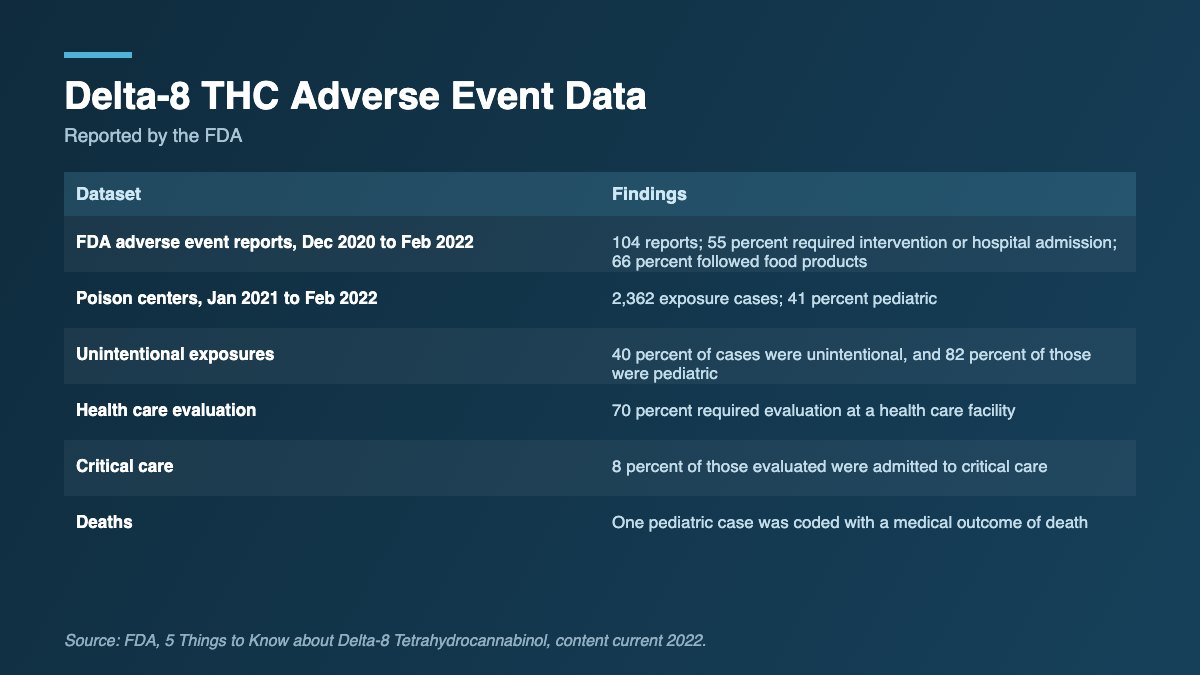
Between December 1, 2020 and February 28, 2022, the FDA received 104 adverse event reports involving delta-8. Seventy seven percent involved adults and 8 percent involved people under 18, with 15 percent not reporting age. Fifty five percent required intervention, such as emergency medical evaluation, or hospital admission. Sixty six percent followed ingestion of delta-8 containing food products such as brownies and gummies.
National poison control centers logged 2,362 exposure cases between January 1, 2021 and February 28, 2022, the January date being when a delta-8 product code was added to the database. Fifty eight percent involved adults and 41 percent involved people under 18.
Forty percent of cases were unintentional exposures, and 82 percent of those unintentional exposures were pediatric. Seventy percent of all cases required evaluation at a health care facility, and 8 percent of those resulted in critical care unit admission. One pediatric case was coded with a medical outcome of death.
The children problem
Those figures point at one specific hazard. Delta-8 is frequently sold as gummies, brownies and candy, in packaging that looks like confectionery, and in many places without an age restriction on purchase.
A child cannot distinguish a THC gummy from a sweet, and a two thirds share of adverse events following food products is what that looks like in data. If these products are in a household, they belong stored the way medication is stored, not the way snacks are stored.
The CDC issued a health alert on delta-8 availability and reported adverse events in September 2021.
See our marijuana reference page and drug information library.
Takeaways
- Delta-8 is barely present in hemp naturally. Nearly all commercial product is chemically converted from CBD.
- The FDA warns that potentially unsafe household chemicals may be used in that conversion, leaving harmful by-products.
- Its effects are intoxicating and similar to delta-9 THC, with reported hallucinations, vomiting, tremor and loss of consciousness.
- Of 2,362 poison center exposure cases, 41 percent were people under 18.
- Eighty two percent of unintentional exposures were pediatric, and 66 percent of FDA adverse event reports followed food products.
- Label claims cannot be relied on. Concentrations, contaminants and delta-9 content all vary between products.
Sources
Food and Drug Administration, Office of the Commissioner, 5 Things to Know about Delta-8 Tetrahydrocannabinol, content current 2022. Centers for Disease Control and Prevention, Health Alert Network advisory on increases in availability of cannabis products containing delta-8 THC and reported cases of adverse events, September 2021.
Need help now? In an emergency call 911. If you are in crisis or thinking about suicide, call or text 988 (Suicide and Crisis Lifeline; veterans press 1). For free, confidential treatment referrals 24 hours a day, call the SAMHSA National Helpline at 1-800-662-4357. You can also search licensed programs at FindTreatment.gov, or use our rehab directory and state listings.
Addiction Now publishes health journalism and reference material. This page is not medical advice, a diagnosis, or a treatment plan. Do not stop a prescribed medication without talking to a clinician. Withdrawal from alcohol, benzodiazepines and barbiturates can cause seizures and can be fatal without medical supervision.