

COD Medical Abbreviation Meaning in Healthcare
If you have ever seen COD on an intake form, discharge summary, referral, lab note, or insurance paperwork, it can feel unsettling. Medical abbreviations are supposed to save time, but they can also create confusion, especially when you are already dealing with a health crisis or trying to support someone you love.
Here is the key point: COD is a medical abbreviation with multiple meanings. The right definition depends on the setting and the surrounding language.
This guide explains the most common ways COD is used in healthcare, with extra focus on the meaning you are most likely to see in addiction and mental health treatment: co-occurring disorders, also called dual diagnosis.

Note: This article is educational and not a medical diagnosis. If you are unsure what COD means on your paperwork, it is appropriate to ask your clinician or the records department for clarification.
What does COD mean as a medical abbreviation?
COD can stand for different things in medicine and healthcare documentation. The meaning changes based on the department, specialty, and type of record.
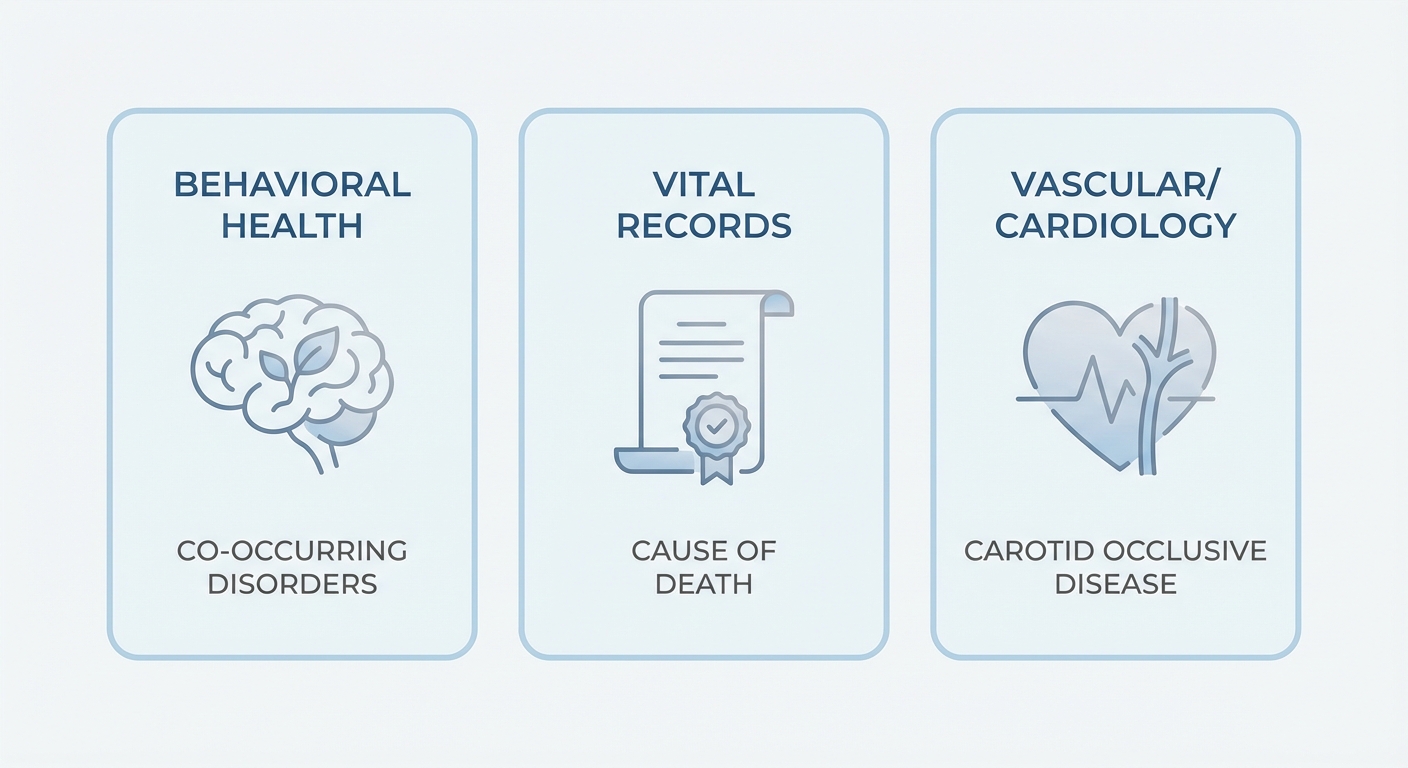
The most common definitions you may encounter are:
- COD = Co-Occurring Disorders (behavioral health and addiction treatment)
- COD = Cause of Death (public health, hospitals, vital records, research)
- COD = Carotid Occlusive Disease (vascular and cardiology settings, less common)
Because those meanings are very different, context matters. A “COD program” in a rehab center does not mean anything related to mortality. Likewise, “COD” on a mortality report does not refer to dual diagnosis.
In addiction and mental health care, COD often means co-occurring disorders

In behavioral health, COD most often refers to co-occurring disorders. You may also see this described as dual diagnosis. For a deeper explanation of how the term is used in treatment settings, see our guide on co-occurring meaning in dual diagnosis care.
What are co-occurring disorders?
Co-occurring disorders (COD) means a person is living with both:
- a substance use disorder (SUD), and
- a mental health disorder
This can include combinations such as alcohol use disorder and depression, opioid use disorder and PTSD, stimulant use disorder and bipolar disorder, or cannabis use disorder and anxiety. Some people have multiple mental health diagnoses alongside SUD.
How common are co-occurring disorders?
Co-occurring mental health and substance use conditions are common. According to the 2023 National Survey on Drug Use and Health (NSDUH) from the Substance Abuse and Mental Health Services Administration (SAMHSA), about 20.4 million U.S. adults experienced both a mental illness and a substance use disorder in 2023.
Source: SAMHSA, 2023 NSDUH Annual National Report (released 2024).
Why you might see COD on treatment paperwork
When a program or clinician writes “COD,” they are often flagging that the person may need integrated treatment, meaning care that addresses both mental health and addiction at the same time. If you want an overview of what dual diagnosis care typically includes, read co-occurring disorders and dual diagnosis care.
You might see COD used in:
- Program descriptions – “COD track,” “COD group,” “COD-capable services,” or “dual diagnosis”
- Assessments and intake notes – documenting symptoms, history, and risk factors
- Referrals – to outpatient therapy, psychiatry, or a higher level of care
- Treatment plans – noting that mental health stabilization and relapse prevention must be coordinated
- Utilization review – insurance documentation describing clinical complexity and needs
Sometimes, COD is not a “stand-alone diagnosis” but a shorthand. The actual diagnoses are typically listed separately, such as “major depressive disorder” and “alcohol use disorder.”
How co-occurring disorders can affect recovery
Living with both a mental health disorder and a substance use disorder (SUD) is not a personal failure. It is a medical reality that often involves brain chemistry, trauma exposure, genetics, social stressors, and learned coping patterns.
Co-occurring disorders can affect recovery in several ways:
- Symptoms can overlap – for example, sleep problems, irritability, concentration issues, and low mood can be part of withdrawal, depression, anxiety, PTSD, or all of the above.
- Substances can worsen psychiatric symptoms – alcohol can deepen depression, stimulants can worsen panic, and cannabis can exacerbate paranoia in vulnerable individuals.
- Mental health symptoms can drive relapse risk – untreated trauma, anxiety, or mood instability can increase cravings and impulsive use.
- Diagnosis can take time – clinicians may need a period of sobriety to determine what is substance-induced versus a primary mental health disorder.
The most important takeaway is hopeful: effective treatment exists, and many people do recover when both conditions are treated together.
What integrated treatment for COD can look like
Integrated treatment means the care team does not treat addiction “first” and mental health “later” as separate silos. Instead, they build one coordinated plan that addresses the whole person.
Depending on needs, integrated care for co-occurring disorders (COD) may include:
1) Screening and assessment
- standardized screening for SUD severity and mental health symptoms
- review of trauma history, sleep, medical conditions, and medications
- evaluation for safety concerns such as suicidality or overdose risk
2) Evidence-based therapy
- Cognitive behavioral therapy (CBT) for thoughts, behaviors, cravings, and coping skills
- Dialectical behavior therapy (DBT) skills for emotion regulation and distress tolerance
- Motivational interviewing to strengthen readiness for change
- Trauma-informed therapy when appropriate, paced safely and not rushed
3) Medication treatment when clinically appropriate
This can include medication for addiction and/or mental health, depending on diagnosis and medical history. Examples include medication for opioid use disorder (MOUD) or medications for depression, anxiety, bipolar disorder, or ADHD, when indicated and carefully monitored.
4) Recovery supports and relapse prevention
- structured groups and psychoeducation about SUD and mental health
- family involvement when safe and helpful
- peer support (such as 12-step or other recovery communities)
- aftercare planning: outpatient therapy, psychiatry follow-up, and community resources
If you are evaluating a program, a helpful question is: “Do you provide integrated treatment for co-occurring disorders, including mental health care and addiction care in the same plan?”
If insurance or plan coverage is part of the paperwork confusion, our overview of your Medi-Cal plan addiction and mental health care may help you understand common next steps.
Other meanings of COD in medical records
Even though COD commonly means co-occurring disorders in behavioral health, you may see COD used differently in other medical contexts.
COD meaning: Cause of death
In hospitals, public health, research, and legal documentation, COD often means cause of death. This may appear in:
- death certificates
- autopsy reports
- mortality statistics and public health reports
- research papers discussing overdose deaths or other outcomes
Context clues include terms such as “immediate cause,” “underlying cause,” “manner of death,” “ICD codes,” “mortality,” or “death certificate.”
COD meaning: Carotid occlusive disease
In some vascular and cardiology documentation, COD can refer to carotid occlusive disease, a condition involving narrowing or blockage of the carotid arteries that can increase stroke risk.
Context clues include “carotid ultrasound,” “stenosis,” “endarterectomy,” “TIA,” “stroke,” or “vascular surgery.”
This meaning is less common than co-occurring disorders and cause of death, but it does appear in certain specialty settings.
How to tell which COD meaning applies
If you are unsure what “COD” means on paperwork, you can often decode it using three quick checks.
1) Identify the setting
- Addiction treatment, counseling, psychiatry – usually co-occurring disorders
- Death certificate, mortality report, public health research – usually cause of death
- Vascular clinic, stroke workup, cardiology – possibly carotid occlusive disease
2) Look for nearby terms
- SUD, relapse prevention, detox, psychiatry, dual diagnosis, integrated treatment – co-occurring disorders
- autopsy, ICD-10, mortality, manner of death – cause of death
- stenosis, carotid, ultrasound, endarterectomy – carotid occlusive disease
3) Ask for clarification in plain language
You do not need to guess. You can say:
- “When you wrote COD here, what does it stand for?”
- “Does COD mean co-occurring disorders in this referral?”
- “Can you write out the full term in my chart so I understand it later?”
Clear communication is part of good care, and most clinicians prefer you ask rather than leave confused.
When COD means co-occurring disorders, what should you do next?
If you are seeing COD because a clinician suspects co-occurring disorders, you may be wondering what happens now. The next step is usually a more complete assessment and a treatment plan that considers both conditions.
Practical next steps
- Request a full diagnostic list – ask for the specific mental health and SUD diagnoses being considered.
- Ask about level of care – detox, inpatient/residential, PHP, IOP, or outpatient, depending on risk and stability.
- Discuss medication options – including medications for cravings or withdrawal and for psychiatric symptoms, if appropriate.
- Plan for follow-up – COD is not just about starting treatment. It is about continuity after discharge.
If you are a family member
It can be painful to watch someone struggle with both mental health symptoms and substance use. Consider asking treatment providers about:
- family education sessions
- how relapse is handled without shame
- safety planning if there is self-harm risk
- how to support recovery boundaries at home
You deserve support too.
Related reading on Drug Addiction Now
- What rehab facilities do and how they help
- Rehab for couples and recovery as a team
- Alcohol, behavior, and myths about intoxication
Frequently Asked Questions
What does COD mean in addiction treatment?
In addiction and behavioral health settings, COD most often stands for co-occurring disorders, meaning a person has both a substance use disorder (SUD) and a mental health disorder. It is also commonly called dual diagnosis.
Is COD the same as dual diagnosis?
Often, yes. Many treatment programs use “COD” and “dual diagnosis” interchangeably. The key idea is integrated care that addresses mental health and substance use together.
Can COD mean cause of death in medical records?
Yes. In hospital mortality records, public health reports, research articles, and death certificates, COD commonly means cause of death. Check the surrounding terms like “mortality,” “ICD codes,” or “death certificate.”
How do I know what COD means on my paperwork?
Look at the setting and nearby words. Rehab or therapy paperwork usually means co-occurring disorders, while mortality documentation usually means cause of death. When in doubt, ask the clinician or medical records staff to write out the full term.
What kind of treatment is recommended for co-occurring disorders?
Many people do best with integrated treatment that addresses both conditions at the same time. That can include therapy (such as CBT or DBT skills), medication management when appropriate, relapse prevention planning, and ongoing follow-up for both mental health and SUD.
Need Help Now?
If you or someone you love is struggling with addiction, help is available 24/7.
- SAMHSA National Helpline: 1-800-662-4357 (free, confidential, 24/7)
- Crisis Text Line: Text HOME to 741741
- National Suicide Prevention Lifeline: 988
Recovery is possible. Take the first step today.
Visit Us
National Consumer Support & Litigation
110 N Lincoln Ave, Corona, CA 92882
Phone: (951) 582-2018