


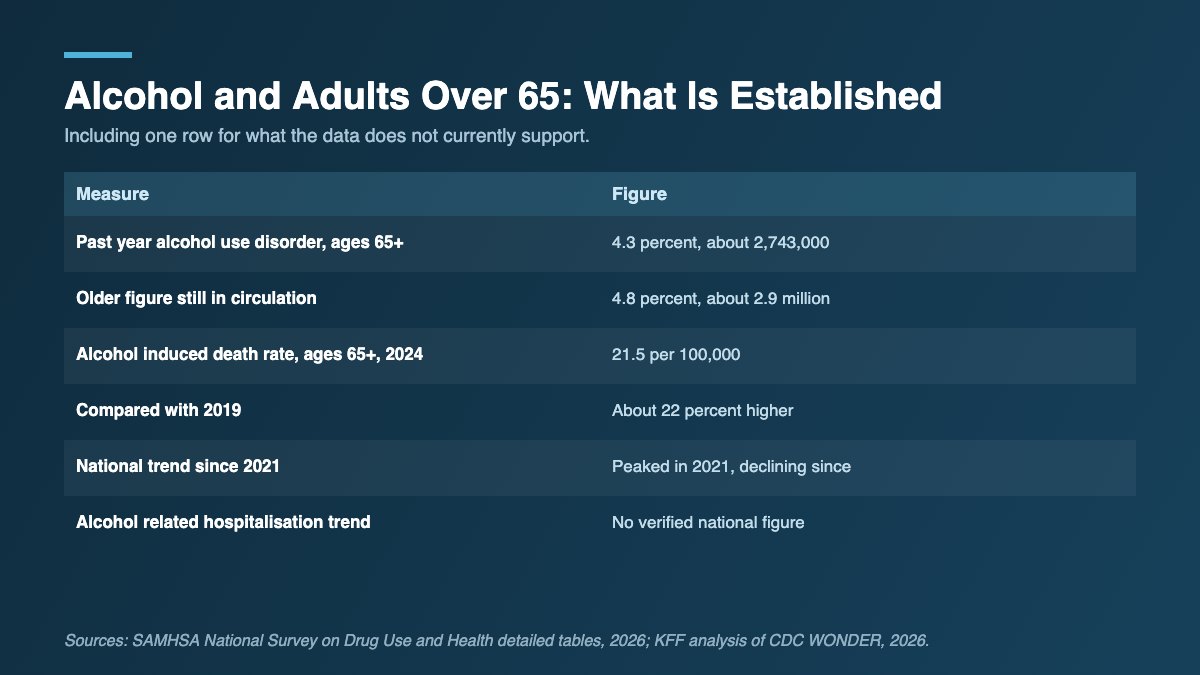
The alcohol induced death rate among Americans aged 65 and over was 21.5 per 100,000 in 2024, roughly 22 percent higher than in 2019. National alcohol death rates also peaked in 2021 and have fallen since. Both facts are true, and coverage that reports only one of them gets the trajectory wrong.
How many older adults have alcohol use disorder
Survey data published in 2026 put past year alcohol use disorder among adults aged 65 and older at 4.3 percent, or about 2,743,000 people. If you look this up elsewhere you may find 4.8 percent and about 2.9 million, which is the figure from the previous survey year and still appears on federal pages that have not been updated.
Resist the temptation to describe the move from 4.8 to 4.3 as a decline. The change carries no statistical significance flag, single year movement in a subgroup estimate is noisy, and two adjacent survey years are not a trend. The defensible statement is that roughly 4 to 5 percent of adults over 65 meet criteria, which is between 2.5 and 3 million people.
The mortality arc
This is where precision matters most. Alcohol induced deaths rose sharply through 2020 and 2021, peaked in 2021, and have declined since without returning to where they were before. For the 65 and over group specifically, the 2024 rate sits about 22 percent above 2019.

So the accurate framing is elevated but improving, not rising. A related figure circulates for ages 45 and over, at 25.2 per 100,000 in 2024, and it should not be attributed to the over 65 group. Different age bands, different numbers.
Why older bodies respond differently
The same number of drinks produces a higher blood alcohol concentration in an older person. Total body water declines with age, so a given dose is distributed into a smaller volume, and hepatic metabolism slows. A quantity of alcohol that was unremarkable at 45 can be genuinely impairing at 70 with no change in behaviour at all.
Two interactions compound this. Older adults take more prescription medications, and alcohol interacts with a long list of them, including benzodiazepines, sleep medications, opioid analgesics, some antidepressants and blood thinners. And alcohol contributes to falls, which are a leading cause of injury death in this age group. A fall with a fractured hip is often recorded as a fall, not as an alcohol related event, which means the true contribution of alcohol to mortality in this population is very likely undercounted by the alcohol induced category.
Why it goes undetected
Screening for alcohol problems was largely designed around younger drinkers, and several of the standard indicators do not apply well to a retired person. Questions about missing work, driving offences and family conflict presuppose employment, a licence and a household. Someone drinking heavily alone at 78 may generate none of the social consequences that flag a problem at 38.
Clinically, the symptoms also mimic ageing. Unsteadiness, memory trouble, poor sleep, low mood and weight loss are all consistent with heavy drinking and all readily attributed to getting older. Bereavement, retirement, chronic pain and isolation are common precipitants, and are frequently treated as sufficient explanations for the symptoms they help cause.
What the data cannot tell us
There is no verified current national figure for alcohol related hospitalisations among older adults, so claims about hospitalisation trends in this group should be treated as unsupported unless a source is given. The prevalence figures are also self reported, and under reporting of drinking is well documented across all age groups.
For the physiological detail on what sustained drinking does, see our reference pages on alcohol and the wider drug information section.
Takeaways
- About 4.3 percent of adults 65 and over met criteria for past year alcohol use disorder in the most recent survey, roughly 2.7 million people.
- An older figure of 4.8 percent still circulates. The difference is not an established decline.
- The alcohol induced death rate for this group was 21.5 per 100,000 in 2024, about 22 percent above 2019.
- National alcohol death rates peaked in 2021 and have fallen since. Elevated but improving is the correct description.
- Age lowers alcohol tolerance physiologically, and interactions with prescription medications and falls are the main added risks.
- Standard screening tools miss older drinkers because they ask about work, driving and family consequences.
Sources
Substance Abuse and Mental Health Services Administration, National Survey on Drug Use and Health detailed tables, published 2026; National Institute on Alcohol Abuse and Alcoholism materials on alcohol and ageing; KFF analysis of CDC WONDER alcohol death data, 2026; National Center for Health Statistics alcohol induced mortality reporting.
Need help now? In an emergency call 911. If you are in crisis or thinking about suicide, call or text 988 (Suicide and Crisis Lifeline; veterans press 1). For free, confidential treatment referrals 24 hours a day, call the SAMHSA National Helpline at 1-800-662-4357. You can also search licensed programs at FindTreatment.gov, or use our rehab directory and state listings.
Addiction Now publishes health journalism and reference material. This page is not medical advice, a diagnosis, or a treatment plan. Do not stop a prescribed medication without talking to a clinician. Withdrawal from alcohol, benzodiazepines and barbiturates can cause seizures and can be fatal without medical supervision.