

MDMA works by causing a large release of serotonin, along with dopamine and noradrenaline. That flood produces the effects people take it for, and it also explains the delayed low that arrives two or three days afterwards. The acute dangers are more specific than most people expect, and both are preventable.
What it does
Rather than blocking reuptake the way an antidepressant does, MDMA forces stored serotonin out of neurons and into the synapse. The result is a much larger and faster rise than the brain produces on its own.
Effects typically begin within thirty to sixty minutes and last three to six hours: euphoria, emotional openness, a sense of closeness to others, heightened sensory experience and increased energy. Physically it raises heart rate, blood pressure and body temperature, dilates pupils, suppresses appetite and commonly causes jaw clenching and teeth grinding.
Overheating is the main way it kills
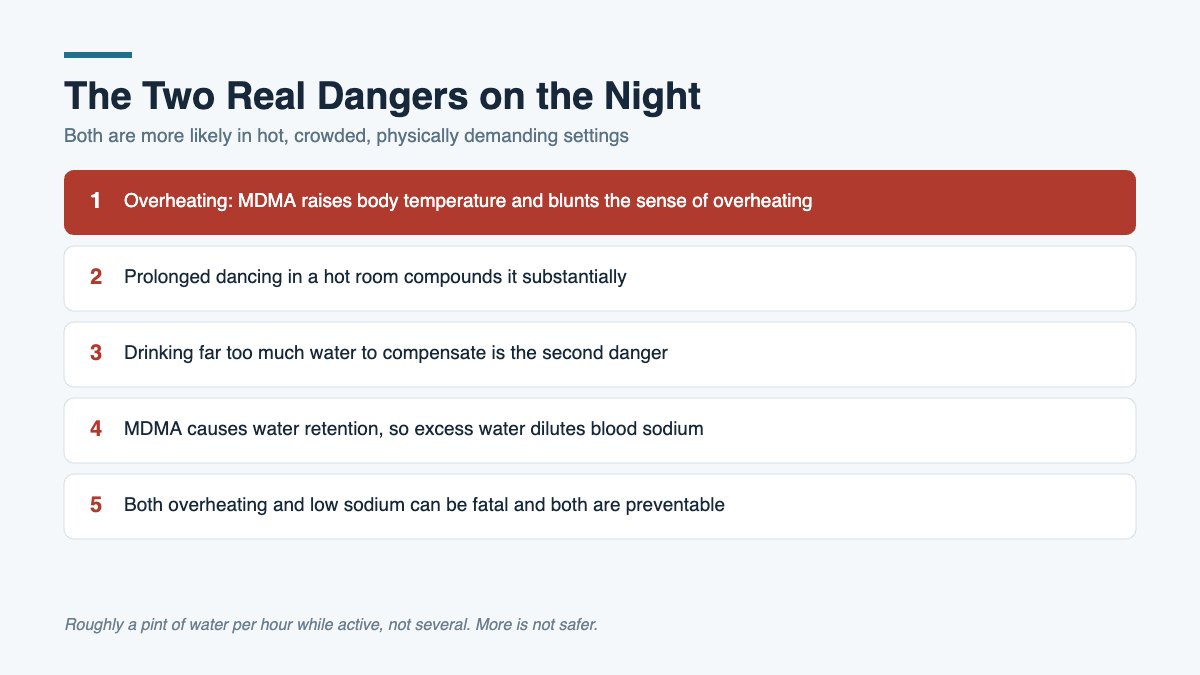
MDMA interferes with the body’s ability to regulate temperature, and it does so in a particularly dangerous way: it raises body temperature while also blunting the perception of being too hot.

Combine that with a hot, crowded room and hours of physical exertion, and body temperature can rise to a level that causes organ damage. Severe hyperthermia can lead to muscle breakdown, kidney failure, clotting problems and death, and it can progress quickly.
Warning signs are not subtle in retrospect: stopping sweating, confusion, very hot dry skin, muscle rigidity, collapse. Someone in that state needs cooling and emergency help immediately, not to be walked outside for air and left.
The water problem
Awareness of overheating produced a second cause of death, and it is a bitter one because it stems from people trying to be careful.
MDMA promotes the release of a hormone that makes the body retain water. Someone drinking large volumes to avoid overheating retains most of it, and blood sodium falls. Low sodium causes the brain to swell, producing confusion, headache, nausea, seizures and, in a number of documented cases, death.
The guidance that follows is specific: roughly a pint of water per hour while dancing, and less if resting. Not several litres. Drinks containing electrolytes are preferable to plain water. More water is not safer, and this is one of the few places where the intuitive precaution is itself the hazard.
Why the low arrives on Tuesday
The delayed comedown is the most reliably reported feature of MDMA and follows directly from the mechanism.
Having forced out a large proportion of stored serotonin, the brain needs time to synthesise more. During that window, typically peaking two to three days after use, people experience low mood, irritability, anxiety, poor concentration and fatigue. It is common enough to have acquired informal names referencing the middle of the week.
It usually resolves within days. It matters more for anyone with existing depression or anxiety, in whom it can be considerably heavier and longer, and frequent use gives the system progressively less opportunity to recover.
Interactions worth taking seriously
Because MDMA acts on serotonin, combining it with other serotonergic drugs raises the risk of serotonin syndrome: agitation, high temperature, rapid heart rate, tremor and muscle rigidity, which can be fatal.
The relevant combinations include SSRI and SNRI antidepressants, MAO inhibitors, which are especially dangerous, tramadol, and certain migraine treatments. Anyone taking an antidepressant should understand this is a genuine and documented risk rather than a theoretical one.
There is also the supply question. Tablets and powder sold as MDMA frequently contain other substances, including cathinones and, increasingly, synthetic opioids. Adulteration means the dose and even the drug are uncertain.
What heavy use appears to do over time
The long term picture is less settled than either enthusiasts or alarmists suggest, and worth stating carefully.
Animal research shows damage to serotonin neurons at high repeated doses. Human studies of heavy long term users have found differences in memory and mood compared with non users, though these studies struggle to separate MDMA from other drug use, sleep deprivation and pre-existing differences.
The reasonable summary is that heavy frequent use carries a plausible risk of lasting effects on memory and mood, that occasional use has not been shown to, and that the interval between occasions is the variable most within a person’s control.
Practical points
- Take breaks from dancing and get somewhere cool. Overheating is the main fatal risk.
- About a pint of water an hour, no more. Excess water is its own danger.
- Do not combine with antidepressants. Serotonin syndrome is real.
- Expect a low two to three days later. It is the mechanism, not a coincidence.
- Space use out. Frequent use gives serotonin no time to recover.
- Confusion, hot dry skin or collapse is an emergency. Cool the person and call 911.
More reference material is available on our drug information pages.
Sources
This article draws on National Institute on Drug Abuse material on MDMA, and on published clinical literature on MDMA related hyperthermia, hyponatremia and serotonin syndrome. It is reference information, not medical advice.
Need help now? In an emergency call 911. If you are in crisis or thinking about suicide, call or text 988 (Suicide and Crisis Lifeline; veterans press 1). For free, confidential treatment referrals 24 hours a day, call the SAMHSA National Helpline at 1-800-662-4357. You can also search licensed programs at FindTreatment.gov, or use our rehab directory and state listings.
Addiction Now publishes health journalism and reference material. This page is not medical advice, a diagnosis, or a treatment plan. Do not stop a prescribed medication without talking to a clinician. Withdrawal from alcohol, benzodiazepines and barbiturates can cause seizures and can be fatal without medical supervision.