

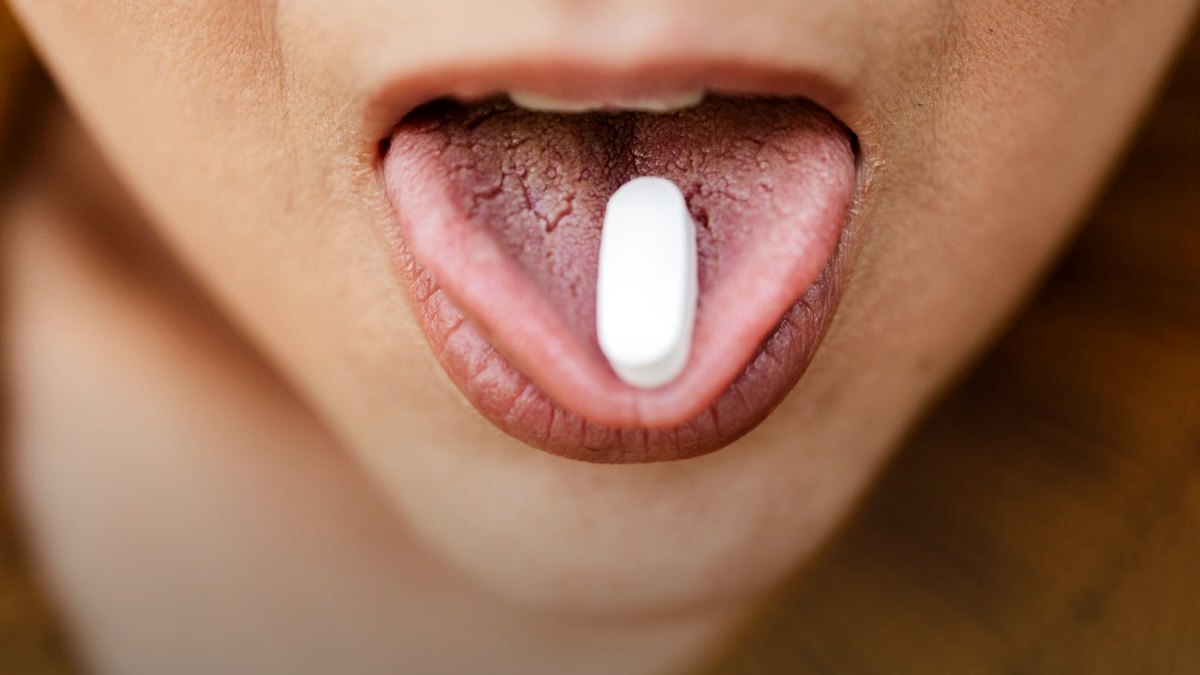
Counterfeit pills are manufactured to look exactly like real prescription tablets, down to the stamped markings, the colour and the shape. There is no visual, tactile or taste test that reliably distinguishes them, and law enforcement laboratory testing has found that a large share of seized counterfeit tablets contain a potentially lethal dose of fentanyl.
What is being counterfeited
The most commonly imitated tablets are oxycodone, particularly the round blue tablet marked M30, alprazolam bars, and Adderall. These are chosen because demand is high and because people who would not knowingly take fentanyl will take what they believe is a prescription medication.
The presses used produce tablets that match genuine ones closely enough that pharmacists and law enforcement often cannot distinguish them without laboratory testing. Colour, imprint, scoring and size can all be reproduced.
This is the central point and it is worth being blunt about: if a tablet did not come from a pharmacy, its appearance provides no information about its contents.

Why the dose varies within a single batch
Legitimate pharmaceutical manufacturing distributes active ingredient evenly through a mixture before pressing, using equipment and quality control designed for that purpose.
Illicit production does not. Fentanyl is active at very small quantities, and mixing it evenly into a large quantity of filler is genuinely difficult. The result is that active drug clumps unevenly, so one tablet from a batch may contain very little and the next may contain several times a lethal amount.
This is why experience with previous pills from the same source offers so little protection. The variation is not between batches but within them.
Why fentanyl in a pill is more dangerous than in powder
Someone buying powder generally knows they are taking an illicit opioid of unknown strength and behaves accordingly, often using less, testing a small amount first, or keeping naloxone nearby.
Someone taking what they believe is a prescription tablet does none of that. They take a whole pill, on the reasonable assumption that a pill is a measured dose. They may take it alone, may have no tolerance to opioids at all, and may have no naloxone in the house.
The people most at risk are therefore often those with the least opioid experience: someone taking what they think is Xanax for anxiety, or Adderall to study, with no expectation of an opioid at all and no tolerance to one.
What test strips can and cannot do
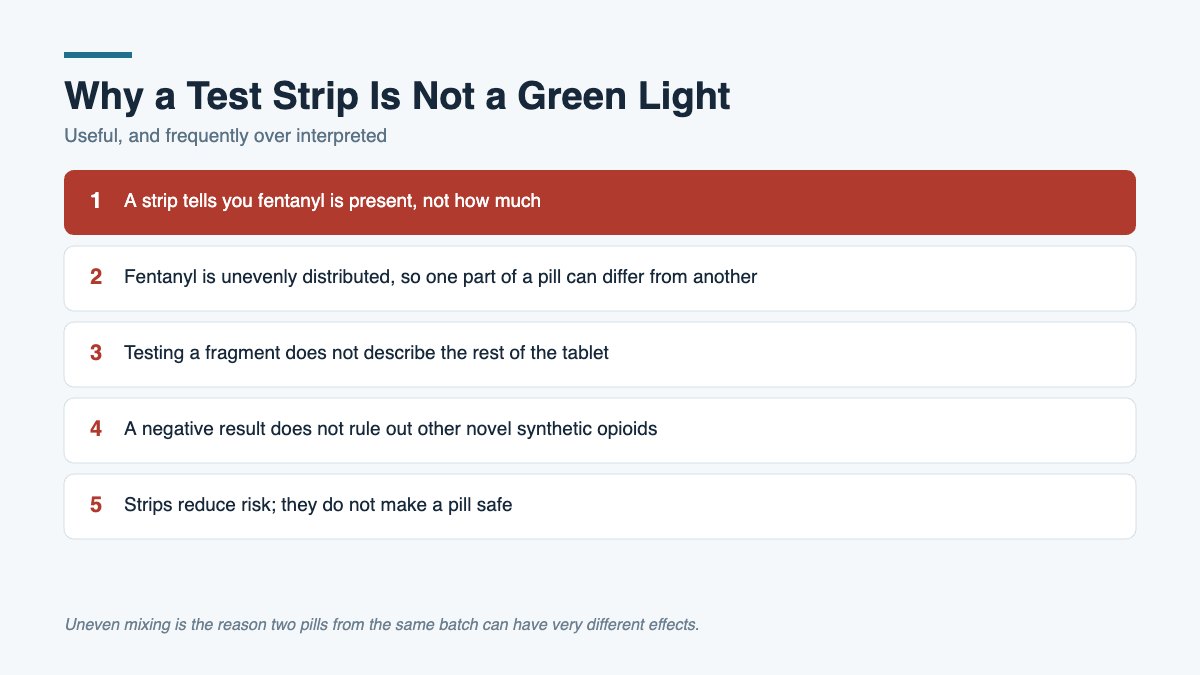
Fentanyl test strips detect the presence of fentanyl in a dissolved sample. They are genuinely useful and they are frequently over interpreted.
A strip is qualitative. It reports presence, not quantity, so it cannot tell you whether a tablet holds a trace or a fatal amount. Because of uneven mixing, testing a portion of a tablet says little about the remainder. And a negative result does not exclude other novel synthetic opioids that the strip is not designed to detect.
Used properly, testing the whole tablet dissolved rather than a fragment, they reduce risk. They do not certify anything as safe.
Recognising an overdose
The signs are the same regardless of what the person believed they were taking: unresponsive to shouting or a firm shake, slow or stopped breathing, snoring or gurgling that cannot be roused, and blue or grey lips and fingertips.
Give naloxone if there is any possibility of an opioid, which now includes any counterfeit pill of any description. It does no harm if opioids are not involved. Call 911, and stay, because naloxone can wear off before the fentanyl does. Further detail is on our fentanyl page.
Where they are being sold
A meaningful share of counterfeit pill sales now happen through social media and messaging apps rather than through anyone the buyer knows in person. Listings use emoji and coded terms, transactions are arranged in minutes, and delivery can be local and same day.
That matters for two reasons. It removes whatever limited accountability existed in buying from a known source, and it puts the supply directly in front of teenagers and young adults who would never have sought out an illicit drug market. Parents and partners are frequently unaware such a purchase is even possible from a phone.
What reduces the risk
- Treat any pill not dispensed by a pharmacy as unknown. Markings are copied exactly.
- Never use alone. The most consistent factor in fatal overdoses.
- Keep naloxone in the house. Including if the pills are meant to be a stimulant or a benzodiazepine.
- Do not rely on a strip as clearance. Presence is not quantity.
- Do not assume consistency within a batch. Uneven mixing is the norm.
- If you have no opioid tolerance, you are at higher risk, not lower.
More reference material is available on our drug information pages.
Sources
This article draws on Drug Enforcement Administration public reporting on counterfeit pill seizures and laboratory testing, Centers for Disease Control and Prevention material on fentanyl and overdose, and published research on fentanyl test strip performance and on the uneven distribution of fentanyl in illicit tablets. It is reference information, not medical advice.
Need help now? In an emergency call 911. If you are in crisis or thinking about suicide, call or text 988 (Suicide and Crisis Lifeline; veterans press 1). For free, confidential treatment referrals 24 hours a day, call the SAMHSA National Helpline at 1-800-662-4357. You can also search licensed programs at FindTreatment.gov, or use our rehab directory and state listings.
Addiction Now publishes health journalism and reference material. This page is not medical advice, a diagnosis, or a treatment plan. Do not stop a prescribed medication without talking to a clinician. Withdrawal from alcohol, benzodiazepines and barbiturates can cause seizures and can be fatal without medical supervision.