

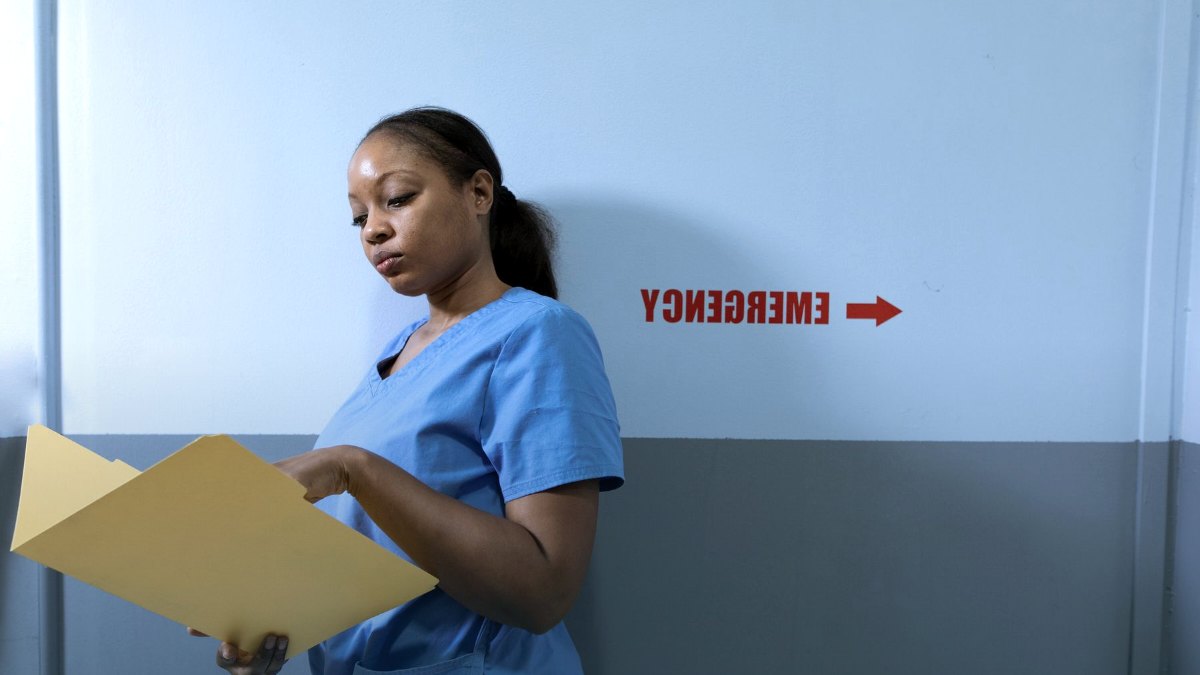
An emergency department visit is often the only contact someone with opioid use disorder has with the medical system in a year. A randomized trial published in 2015 established that starting buprenorphine during that visit works. Eleven years later, most opioid-related emergency visits still end without it, and the reasons are largely about staffing rather than law.
The trial that settled the clinical question
D’Onofrio and colleagues published a randomized clinical trial in JAMA in 2015 comparing three approaches for patients presenting to an emergency department with opioid dependence: referral alone, brief intervention plus referral, and buprenorphine started in the department with facilitated primary care follow-up.
The buprenorphine arm significantly increased engagement in addiction treatment at 30 days and reduced self-reported illicit opioid use compared with both other approaches. That result has not been seriously contested, and it is the basis on which professional bodies now describe emergency department initiation as appropriate practice.
How much it is actually done
A study published in JAMA Network Open in September 2024, drawing on records from more than 1,100 hospitals, tracked what happened over a decade.
The share of opioid-related emergency department encounters involving buprenorphine rose from 2.75 percent in 2013 to 27.3 percent in 2022. Across the study’s three most recent years, the average was 16.1 percent, split between 14.8 percent given a dose in the department and 5.7 percent given a prescription at discharge.
A tenfold increase is real progress and should be reported as such. It also means that in the most recent year measured, roughly seven in ten opioid-related emergency visits ended without the medication that a randomized trial showed improves engagement. The authors and subsequent commentary describe substantial demographic and geographic variation in who receives it.
Why the waiver removal changed less than expected
The federal X-waiver, which required separate authorization to prescribe buprenorphine, was eliminated in January 2023 under the Mainstreaming Addiction Treatment Act. A one-time training requirement replaced it.
The number of authorized prescribers rose quickly, exceeding 53,600 by December 2023, about 11,500 more than a year earlier. The number of people actually receiving buprenorphine barely moved, holding around 810,000 to 830,000 a month with no meaningful increase through 2023 and 2024. Some analyses found no change or a slight decrease.
One important confounder: this period coincided with the unwinding of pandemic-era Medicaid continuous enrollment, which removed coverage from millions of people and would independently suppress access. Attributing the flat line entirely to the waiver policy would be wrong.
Still, the pattern is instructive. The bottleneck was not the number of people legally permitted to prescribe. Removing a legal barrier does not create a clinical pathway, which is the same lesson the methadone rule change produced.
What the barriers actually are
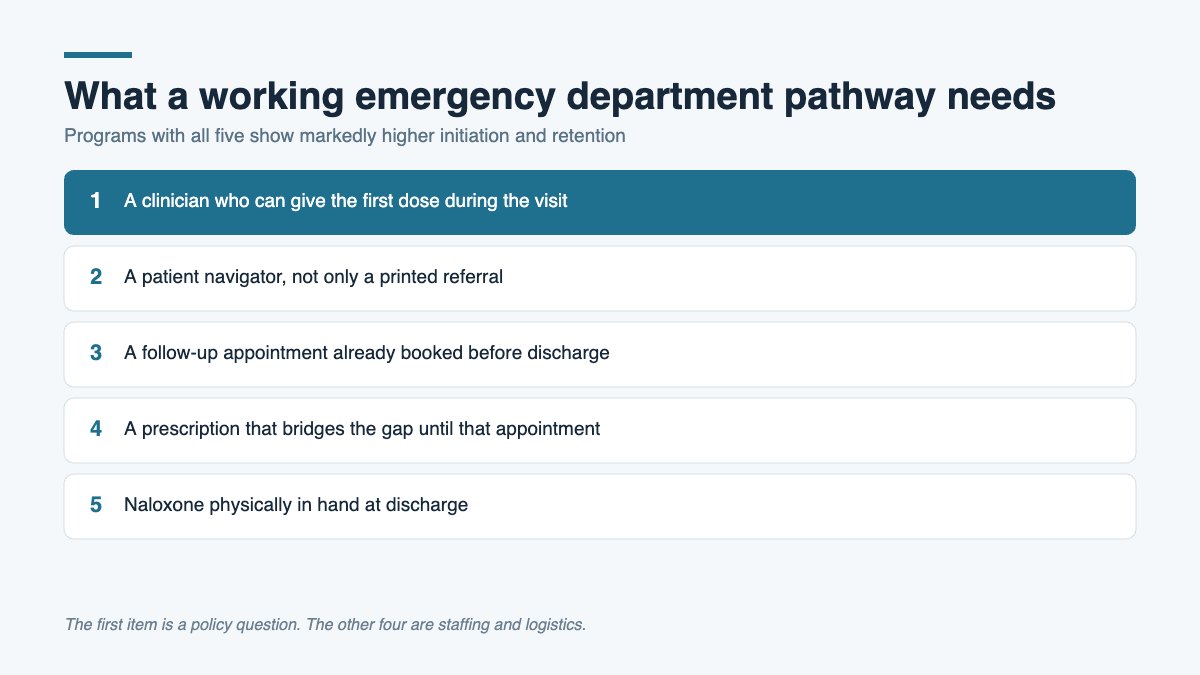
Surveys of emergency clinicians point to a consistent set. The inability to guarantee follow-up care after discharge. Not knowing which community treatment resources exist or have capacity. Insufficient training and confidence. And underneath all three, the absence of the supporting infrastructure, particularly patient navigators and warm handoffs, that turns a first dose into ongoing treatment.
The counter-example is instructive. Within one California hospital network built around navigation, public hospitals showed navigation and buprenorphine treatment rates more than 50 percent higher than private hospitals in the same network, and roughly half of patients started in the emergency department remained engaged in community treatment. The variable was the navigator, not the drug.
What to ask if you are the family member
- Can you start buprenorphine here today, before discharge?
- If not here, who can, and how soon?
- Is there a navigator or peer worker who can stay with us through the handoff?
- Can we leave with a prescription that covers the gap until the first appointment?
- Can we leave with naloxone in hand rather than a recommendation to buy it?
Asking the first question changes outcomes more often than people expect, because in many departments the capability exists and is not offered by default.
What to take from this
- A 2015 randomized trial established that emergency department buprenorphine improves 30-day treatment engagement.
- Use rose from 2.75 percent of opioid-related encounters in 2013 to 27.3 percent in 2022, averaging 16.1 percent over the most recent three years measured.
- Removing the federal waiver in 2023 increased authorized prescribers sharply but did not increase the number of patients treated.
- Medicaid unwinding over the same period is a significant confounder.
- The documented barriers are follow-up capacity, knowledge of local resources and training, not legal authority.
- Networks that fund patient navigators show markedly higher initiation and retention.
For background, see our drug information library and the pages on fentanyl and oxycodone.
Sources
This article relies on D’Onofrio and colleagues in JAMA (2015), Chhabra and colleagues in JAMA Network Open (September 2024), SAMHSA material on the Mainstreaming Addiction Treatment Act, analysis from the University of Michigan Institute for Healthcare Policy and Innovation on buprenorphine use after waiver removal, and published evaluations of emergency department navigation programs.
Need help now? In an emergency call 911. If you are in crisis or thinking about suicide, call or text 988 (Suicide and Crisis Lifeline; veterans press 1). For free, confidential treatment referrals 24 hours a day, call the SAMHSA National Helpline at 1-800-662-4357. You can also search licensed programs at FindTreatment.gov, or use our rehab directory and state listings.
Addiction Now publishes health journalism and reference material. This page is not medical advice, a diagnosis, or a treatment plan. Do not stop a prescribed medication without talking to a clinician. Withdrawal from alcohol, benzodiazepines and barbiturates can cause seizures and can be fatal without medical supervision.